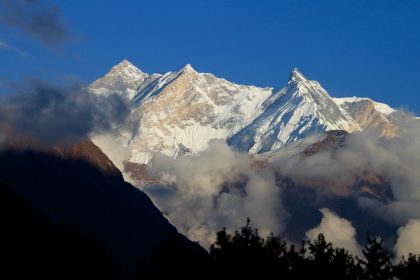







Tragedy strikes near the summit
Late on Monday night, authorities were alerted to a group of four climbers in distress on the west side of Aoraki / Mount Cook on New Zealand’s South Island. Two members of the group were rescued early Tuesday morning — uninjured — but the other two, believed to be a mountain guide and a client, were later found dead after a high‑altitude fall.
What happened: the fall and recovery
According to the New Zealand Mountain Guides Association and police reports: the deceased climbers were roped together when one slipped near a ridge close to the summit of Aoraki and pulled the other off in a slide of approximately 1,500 feet (≈460 metres). The fall occurred around 11:20 pm local time; the bodies were located around 7:00 am after extensive search efforts involving helicopters in challenging alpine terrain.
The mountain and its risks
Standing at 3,724 metres, Aoraki / Mount Cook is New Zealand’s tallest peak and features steep ridges, glaciers, frequent crevasses and rapidly changing weather—factors that contribute to its high risk for climbers. Authorities note that more than 240 deaths have been recorded on and around the mountain over the past century.
Implications and response
Police area commander Inspector Vicki Walker said crews are working to recover the bodies and notify next of kin. The guiding community, via the NZ Mountain Guides Association, expressed deep sadness, noting that the guide who died was an IFMGA‑qualified professional and a valued member of the community. The incident highlights once again the perils faced even by experienced climbers on high‑alpine routes.
What to watch
- Whether an investigation will determine more precisely what triggered the slip (ice/rock conditions, fatigue, equipment, rope technique).
- Any safety advisories or route changes issued for the west ridge or summit area of Aoraki / Mount Cook.
- The ongoing recovery operation and the status of the surviving two climbers (psychological, physical support).
- Broader discussion in New Zealand’s mountaineering community regarding guided ascents, client‑guide rope practices and risk mitigation on technical peaks.