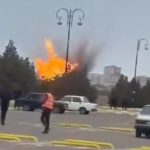







BAOTOU, Inner Mongolia — A powerful explosion at a major industrial facility in northern China has claimed the lives of at least two workers, left eight people unaccounted for, and injured 84 others, local authorities said Monday. The blast occurred on Sunday afternoon at a steel factory in Baotou City in the Inner Mongolia Autonomous Region, prompting a large-scale emergency response and an official investigation into the causes and accountability of the accident.
The Explosion and Immediate Aftermath
The factory explosion happened at approximately 3:03 p.m. local time on Sunday at the Baogang United Steel plant, a state-owned enterprise and one of the region’s key industrial hubs. According to municipal officials, the blast was triggered by the rupture of a 650-cubic-meter saturated water and steam spherical tank, sending a shockwave across the surrounding area and causing tremors in nearby neighborhoods.
Emergency services, including fire crews, medical teams and search units, were quickly dispatched to the scene. Eighty-four people were injured and transported to local hospitals, with at least five reported in serious condition and the remainder suffering from burns, facial wounds and soft-tissue injuries. All injured individuals were reported to be in a stable condition as treatment continued under the supervision of medical experts from the autonomous region.
Search and Rescue: Missing Workers and Emergency Response
In addition to the confirmed fatalities, authorities announced that eight workers were missing after the explosion. Rescue teams have been working around the clock to locate those unaccounted for amid the extensive debris and structural damage at the site. Officials established an emergency rescue headquarters to coordinate efforts among fire, health, public security and industrial safety departments.
City and regional leaders also ordered a temporary suspension of production at the accident-hit plant while conducting a city-wide safety overhaul for industrial and trade enterprises to prevent similar incidents in the future.
Investigation and Accountability
In the wake of the explosion, an accident investigation team was formed by the Inner Mongolia regional government to determine the underlying causes and identify any legal liabilities. Authorities have stated that those found negligent or in violation of safety regulations will be held strictly accountable under Chinese law.
Chinese police have also detained several factory officials and personnel connected with the operations at the Baogang plant, signaling a law-enforcement response alongside the technical inquiry. This move reflects Beijing’s heightened emphasis on industrial safety and regulatory compliance amid ongoing efforts to tighten workplace standards across heavy industries.
Broader Impact and Public Safety Measures
While preliminary environmental monitoring has detected no immediate adverse effects on air or soil quality, authorities continue to assess potential longer-term impacts. Local utility services, including residential heating, have remained unaffected by the blast, offering some reassurance to communities surrounding the industrial zone.
The explosion has reignited discussions within China about industrial safety practices, particularly in sectors involving high-pressure systems and heavy machinery. Although large industrial accidents in China have occurred in the past, authorities increasingly emphasize transparency in emergency response and accountability measures in their public communication strategies.
Community and Corporate Reactions
In Baotou and surrounding areas, residents expressed concern over safety at major industrial facilities that are central to the local economy. Baotou’s municipal government has pledged support for the victims’ families, including financial assistance and ongoing updates on the rescue and recovery operations.
Baogang United Steel, a cornerstone of regional industry, has faced scrutiny over safety procedures in recent years, and this latest incident likely will prompt both internal reviews and external regulatory evaluations to prevent future tragedies.