




In a dramatic and dangerous escalation of long-running tensions, Pakistan has formally declared a state of “open war” on Afghanistan after launching widespread military strikes against key Afghan cities, including the capital, Kabul. The announcement by Pakistani defence officials follows months of simmering border clashes, cross-border hostilities and failed peace efforts, and marks one of the most severe breakdowns in relations between the neighbouring states in decades.
The escalation has prompted international alarm, calls for restraint and renewed diplomatic activity to prevent the conflict from widening further across the region.
From Border Clash to Open Conflict
The immediate catalyst for Pakistan’s declaration came after intensified exchanges of fire along the contested Durand Line, the 2,611-kilometre frontier separating Pakistan and Afghanistan. For months Islamabad has accused the Afghan Taliban-led government of providing safe haven to militant groups — particularly the outlawed Tehrik‑e‑Taliban Pakistan (TTP) and allied factions — which Islamabad blames for numerous attacks inside Pakistani territory. Afghanistan has denied such claims.
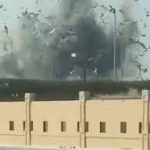
After Afghan forces mounted attacks on Pakistani border posts late Thursday, Pakistani aircraft carried out airstrikes deep into Afghan territory, hitting Kabul, Kandahar, Paktia and other provinces. Explosions were reported across major urban centres, sending plumes of smoke skyward and prompting alarm among residents. In subsequent remarks, Pakistan’s defence minister Khawaja Mohammad Asif declared that “our patience has now run out” and the two neighbours were in a state of “open war.”
Analysts say the declaration signals a shift from periodic skirmishes to broader military engagement, though Islamabad frames its actions as self-defence against what it describes as sustained Afghan aggression and sanctuary for militants.
Pakistan’s Rationale and Military Objectives
Pakistani officials argue that the extensive bombardment was necessary to degrade militant networks and to retaliate against cross-border attacks that Islamabad says have killed soldiers and civilians. In public statements, Islamabad has portrayed the strikes on Afghan cities as targeted operations against Taliban military infrastructure and militant bases responsible for the recent escalation.
Pakistan’s government claims that the bombardment inflicted substantial losses on Afghan Taliban forces and destroyed strategic sites, though casualty figures vary widely and cannot be independently verified. Afghan authorities have reported counter-claims of Pakistani casualties and losses during the earlier border clashes.
The shift from localized border engagements to air operations over major cities indicates a significant expansion of Pakistan’s military campaign and reflects deep frustration among Pakistan’s leadership with the persistence of militant violence and what it regards as Kabul’s inability or unwillingness to control armed factions on its soil.
Afghan Response and Casualty Disputes
The Taliban leadership in Kabul condemned the Pakistani strikes as a blatant violation of Afghan sovereignty and international law, rejecting Islamabad’s assertions about militant sanctuaries. Afghan officials released their own accounts of the clash, including claims that they inflicted significant casualties on Pakistani forces during the earlier border confrontation.
Both sides’ casualty figures differ sharply — Pakistan has asserted it eliminated scores of Afghan fighters, while Afghanistan claims Pakistani military losses and captured personnel. Independent confirmation of these numbers is constrained by restricted media access and the ongoing fluidity of the conflict.
Impact on Civilians and Border Populations
The military escalation has had severe repercussions for civilians on both sides of the frontier. Reports indicate that artillery, mortar fire and airstrikes have affected populated areas, leading to civilian deaths, injuries and displacement, particularly near the Torkham border crossing and in provinces near the border. Relief and humanitarian officials warn that worsening hostilities will exacerbate an already acute humanitarian situation in the region.
Local residents in Kabul and Kandahar described waking to the sound of explosions, with some eyewitnesses recounting damage to homes and infrastructure. Afghan authorities also reported that mortar shells landed in a refugee camp near the border, injuring non-combatants, including women and children.
Such developments have intensified public anxiety and underscored fears that the conflict could draw in civilians far removed from frontline positions.
Diplomatic Reactions and International Calls for Restraint
The international community has reacted with growing concern. The United Nations, European Union, Qatar, Turkey and Saudi Arabia have urged both Pakistan and Afghanistan to halt military actions and pursue negotiation, emphasizing the need to protect civilian life and uphold international humanitarian law.
The United States has publicly supported Pakistan’s claim to defend itself, while also expressing concern over civilian suffering. Washington reiterated its long-standing strategic ties with Islamabad, even as it called for de-escalation and adherence to diplomatic channels.
Other regional powers, including China and Iran, have offered to mediate and stressed the importance of dialogue, warning that a prolonged conflict could destabilise South and Central Asia.
Breakdown of Prior Ceasefires and Mediation Efforts
The current rupture follows earlier diplomatic efforts to contain the long-running dispute. A Qatari-mediated ceasefire in 2025 briefly eased tensions, and subsequent rounds of peace talks in Istanbul sought to forge a more durable settlement, but ultimately failed to reconcile core issues.
Pakistan’s declaration of open war and its bombardment of Afghan cities mark a dramatic setback for these initiatives, illustrating how fragile diplomatic gains can unravel amid flare-ups of violence and mutual distrust.
Broader Strategic Implications
The conflict’s escalation raises alarm among foreign policy and security analysts, given Pakistan’s status as a nuclear-armed state and its complex relationships with regional actors. Any sustained military confrontation between Islamabad and Kabul could have ripple effects on security cooperation, counterterrorism efforts and regional stability.
Further complicating matters is the enduring dispute over the Durand Line; Kabul has historically refused to recognise the colonial-era border formally, a longstanding source of friction exacerbated by the current hostilities.
For Pakistan, the open conflict represents both a tactical response to immediate security concerns and a strategic assertion of military resolve. Whether this approach will succeed in altering the dynamics of militant activity along the frontier or entrench deeper animosity remains an open question.
Looking Ahead: Risks and Prospects for De-escalation
With both sides entrenched in hostilities and international mediators pushing for talks, prospects for near-term de-escalation are uncertain. Diplomatic channels remain active, but trust between Islamabad and Kabul has been severely eroded.
The coming weeks will be critical. Avoiding further civilian casualties, establishing ceasefire mechanisms and addressing root causes — including militant activity and border security — will be key priorities for negotiators and regional stakeholders.
As Pakistan’s declaration of open war reverberates across South Asia, the conflict underscores how localized disputes can burgeon into wider crises, threatening stability in an already volatile region.