


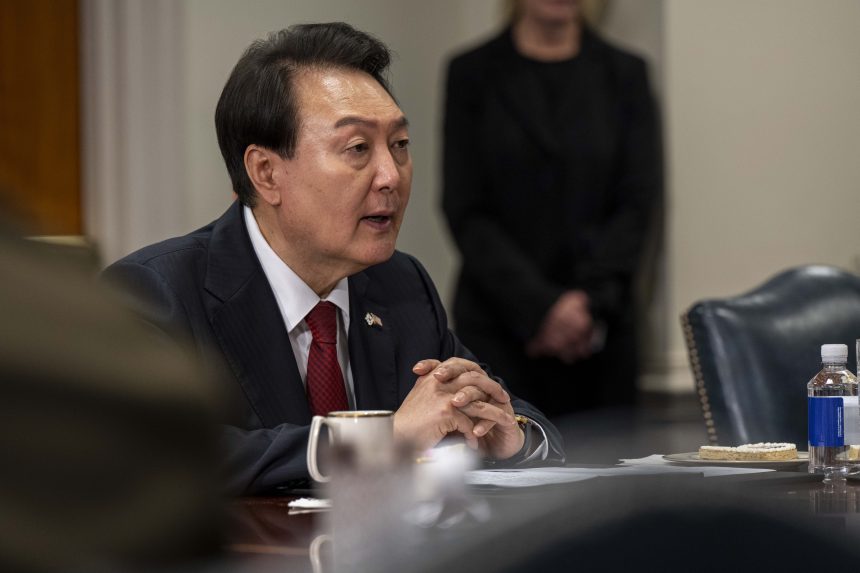
In a televised address on December 12, 2024, South Korean President Yoon Suk Yeol staunchly defended his recent declaration of martial law, asserting it was a legitimate act of governance aimed at preserving national stability. He pledged to “fight to the end” against impeachment efforts and accusations of rebellion.
Justification of Martial Law Declaration
President Yoon described the December 3 martial law decree as a necessary measure to counter what he termed “anti-state forces” within the opposition Democratic Party. He accused the party of paralyzing government functions and sympathizing with North Korea, stating, “I will fight to the end to prevent the forces and criminal groups that have been responsible for paralyzing the country’s government and disrupting the nation’s constitutional order from threatening the future of the Republic of Korea.”
Opposition’s Response
The Democratic Party swiftly condemned Yoon’s address, labeling it “an expression of extreme delusion” and “false propaganda.” They have submitted a new impeachment motion against the president, with a vote anticipated over the weekend. The opposition-controlled parliament has also passed motions to impeach and suspend Yoon’s police chief and justice minister over the martial law imposition, intensifying the political crisis.
Public Reaction and Protests
The brief imposition of martial law has ignited widespread public protests, with demonstrators demanding President Yoon’s resignation. The deployment of armed troops to encircle the National Assembly during the decree has been particularly controversial, evoking memories of past authoritarian rule.
Legal and Political Implications
Legal experts and opposition leaders argue that the martial law declaration was unconstitutional. Investigations are underway to determine if President Yoon’s actions constitute abuse of power or rebellion. If the impeachment motion passes, Yoon’s presidential powers would be suspended pending a Constitutional Court decision, a process that could extend for months.
International Observations
The international community is closely monitoring the situation, with concerns about South Korea’s democratic stability. The unfolding events have significant implications for the nation’s political future and its adherence to democratic principles.
As the political turmoil continues, South Korea faces a critical juncture in upholding its democratic institutions and ensuring governmental accountability.