





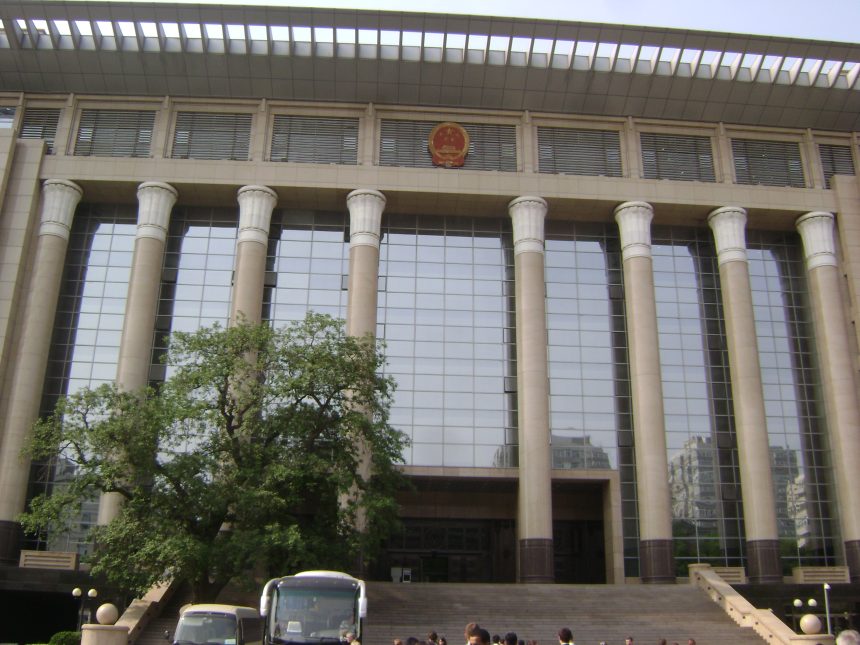
BEIJING / OTTAWA — China’s highest judicial authority has overturned the death sentence of Canadian national Robert Lloyd Schellenberg, a dramatic legal reversal that observers say could mark a new thaw in strained Sino-Canadian relations. The decision by the Supreme People’s Court of China came after years of diplomatic tension between Beijing and Ottawa and follows high-level talks aimed at rebuilding bilateral ties.
Long-Running Case Reversed After Years on Death Row
On 6 February 2026, China’s Supreme People’s Court struck down a previous judgment that had sentenced Schellenberg to death for drug trafficking, ordering that his case be retried by the Liaoning High People’s Court in northeastern China. The decision was confirmed by Schellenberg’s lawyer, Zhang Dongshuo, who said the ruling was issued the previous day.
Schellenberg — who has been held in the port city of Dalian since his 2014 arrest — now faces a fresh trial, although no date has yet been set. Under the Supreme People’s Court’s order, the capital punishment cannot be reenacted in the retrial, potentially leading to a lesser sentence if convicted again.
Recalling a Controversial Saga of Sentencing and Diplomacy
Schellenberg’s legal saga stretches back more than a decade. Initially sentenced in 2018 to 15 years’ imprisonment for attempting to smuggle more than 222 kg of methamphetamine, his case took a controversial turn in January 2019. A retrial by a lower Chinese court dramatically increased the sentence to death in what critics labelled a politically charged proceeding soon after Canada detained Huawei chief financial officer Meng Wanzhou in Vancouver.
At the time, Amnesty International described the retrial as a “flagrant violation of international law,” and the case became emblematic of the diplomatic chill between the two nations. China’s response to Meng’s detention — including the 2018 arrests of Canadians Michael Spavor and Michael Kovrig on espionage charges — had fueled accusations of hostage diplomacy from Ottawa.
Diplomatic Context: Signs of a Thaw Between Beijing and Ottawa
The overturning of Schellenberg’s death sentence coincides with renewed diplomatic engagement. Canadian Prime Minister Mark Carney, who took office in 2025, has made overtures to strengthen trade and political cooperation with China, against the backdrop of U.S. policy shifts and global economic pressures. Analysts note that Carney’s recent visit to Beijing — centred on forging improved economic links — may have helped create the conditions for this legal decision.
While Canadian officials have not directly attributed the court’s ruling to diplomatic negotiations, the timing has underscored a desire on both sides to ease tensions and reset relations after nearly a decade of strain. Ottawa has continued to provide consular support to Schellenberg and his family in the wake of the announcement.
Justice, Politics and International Reactions
The case has drawn widespread international attention over its legal and political ramifications. Human rights organisations have long criticised China’s application of the death penalty and the handling of retrials — particularly in cases with international dimensions — while diplomatic observers have seen the latest development as a carefully calibrated signal by Beijing that it is willing to de-escalate certain disputes with foreign governments.
In Ottawa, commentators welcomed the decision, even as many pointed out that Schellenberg remains in custody pending retrial. The Canadian government has maintained that it consistently advocates against the death penalty and seeks fair treatment for its citizens abroad — a stance that aligns with Canada’s complete abolition of capital punishment in 1999.
The Road Ahead: Retrial and Relations
As Schellenberg prepares for a new legal hearing, the broader implications of China’s decision are already being debated in diplomatic, legal and policy circles. The retrial — expected to result in a non-capital sentence — could ease a long-standing point of contention between Beijing and Ottawa and pave the way for more robust economic and strategic cooperation, particularly in areas such as trade, technology and education.
Experts caution that while the overturning of a death sentence is a rare and significant step, it represents only the beginning of a nuanced rapprochement that will require sustained efforts from both governments. The unfolding legal process, outcomes from high-level talks and other diplomatic movements in the weeks ahead will offer clearer insights into the future of China–Canada relations in a shifting global landscape.