





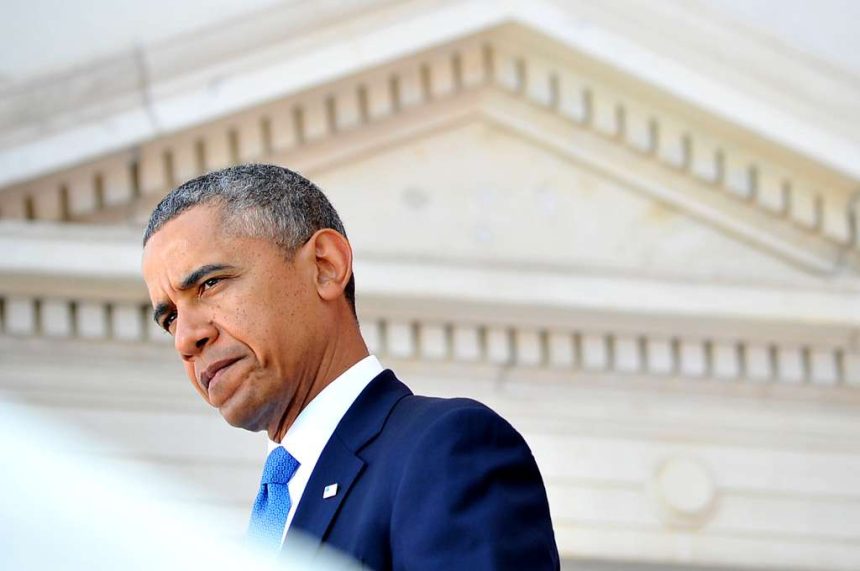
WASHINGTON — Former U.S. President Barack Obama has publicly condemned what he described as a decline in political discourse and decorum in the United States, following a controversial video shared on Donald Trump’s social media account that depicted Mr. Obama and his wife Michelle Obama as monkeys. In his most direct remarks yet on the incident, Obama decried the erosion of respectful political norms and warned of broader consequences for American civic life.
The Controversial Video and National Backlash
The controversy began on 5 February 2026, when a video was posted on Trump’s Truth Social account that briefly showed faces of the Obamas superimposed on the bodies of apes. The clip, part of a longer segment promoting false claims about the 2020 election, drew immediate condemnation from politicians and civil rights groups, who highlighted the longstanding racist trope of equating Black people with primates — an offensive and dehumanizing stereotype.
The White House initially dismissed criticism as “fake outrage,” but the post was later deleted, with officials saying it had been shared in error by a staff member. Trump himself has resisted calls to apologize, asserting he had not seen the offensive portion and standing by the broader messaging.
Obama’s Response: Decline of Decorum and Civility
In an interview released on 14 February, Obama lambasted the broader climate of public discourse that enabled the post. Speaking with podcaster Brian Tyler Cohen, he criticised the absence of shame or propriety among some political figures and lamented what he sees as a normalization of disrespect and cruelty in political messaging.
“There doesn’t seem to be any shame about this among people who used to feel like you had to have some sort of decorum and a sense of propriety and respect for the office, right? That’s been lost,” Obama said, noting that many Americans find such behaviour “deeply troubling.”
He described current patterns in political discourse as akin to a “clown show” on social media and television, raising concerns about impacts on democratic norms and public trust. Obama also hinted that such tactics could harm Trump’s Republican allies in upcoming elections, suggesting the ultimate judgement will come from voters.
Broader National and Political Reactions
The racist imagery sparked bipartisan criticism, with figures from both parties condemning the clip. Republican Senator Tim Scott, the only Black GOP senator, called the content “the most racist thing I’ve seen out of this White House,” while others publicly urged Trump to apologise and reassure the nation of its commitment to dignity and equality.
Public figures, commentators and civil rights organisations also weighed in, stressing the historical weight of racial dehumanisation and the dangers of allowing such depictions to circulate without consequences. The episode has stirred debate over the responsibilities of political leaders on social media and the ethical limits of political satire.
Context: Racism, Rhetoric and Political Culture
Experts say that invoking imagery that equates Black individuals with animals draws on a deeply rooted racist trope with a long history of dehumanising African Americans — a reality that amplifies the sensitivity and outrage around the incident. Many commentators linked the episode to wider concerns about misinformation, artificial intelligence-generated media and the erosion of shared standards of public discourse.
Obama’s denunciation also touched on other grievances, including his views on recent federal immigration enforcement tactics in Minnesota, which he described as reminiscent of repressive behaviour seen in authoritarian regimes — an assessment reflecting his broader critique of rising polarisation and government conduct.
Implications for American Politics
The confrontation between the two former presidents highlights deep fissures not only between political parties but within the broader culture of American public life. Obama’s comments underscore a concern among many civic leaders that political communication has shifted toward spectacle at the expense of mutual respect, potentially undermining democratic governance and civic cohesion.
As debates over race, media responsibility and political rhetoric continue to roil the national conversation, the reaction to the racially offensive clip — and Obama’s public critique — may serve as a flashpoint for broader efforts to recalibrate the tone and norms of political engagement in the United States.