





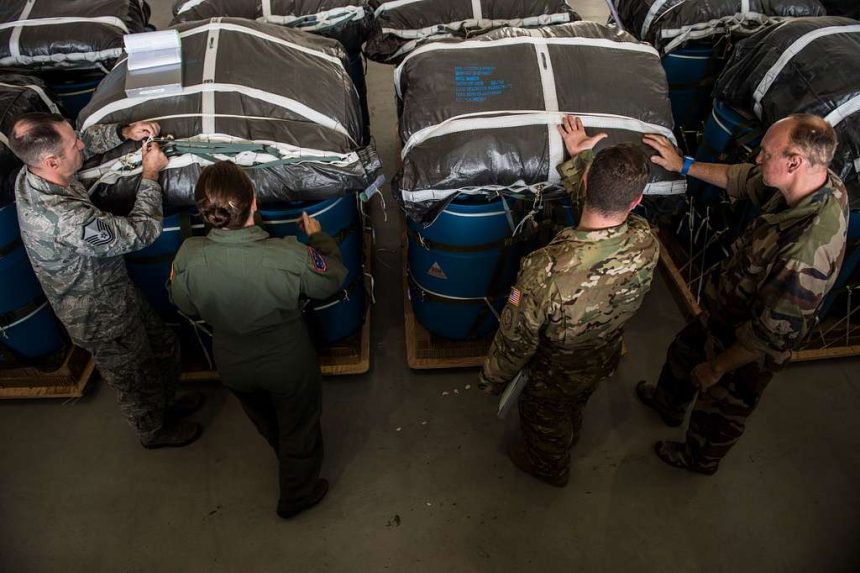
In an unprecedented move, the United States has initiated its first airdrop of aid into the war-torn Gaza Strip, marking a significant moment in the ongoing Israel-Gaza conflict. This humanitarian initiative comes in the wake of a desperate need for relief in the region, underscored by a recent chaotic incident that led to the tragic deaths of dozens of Palestinians during an aid distribution effort. The US’s decision to employ aerial means for aid delivery underscores the critical situation on the ground and the challenges faced in providing necessary assistance to the besieged population.
A Coordinated Effort
The airdrop, which included a substantial provision of 38,000 meals, represents a collaborative endeavor between the United States and regional allies, with a focus on ensuring the safe and efficient delivery of aid to those in dire need. The US’s engagement in this effort highlights the broader international concern over the humanitarian crisis unfolding in Gaza and underscores the imperative of global cooperation in addressing the immediate needs of the civilian population.
The Role of Jordan and Israel
Adding to the international effort, Jordan, in coordination with Israel, has also played a pivotal role in addressing the medical needs within the Strip. The Jordanian air force successfully airdropped urgent medical supplies to a field hospital in Gaza, operated by the kingdom since 2009. This act of solidarity, facilitated in part by Israel’s cooperation, signifies the regional commitment to alleviating the suffering of those affected by the conflict. The collaboration between Jordan and Israel in this humanitarian endeavor highlights the complexity of the situation and the necessity of cross-border cooperation in times of crisis.
The Escalating Humanitarian Crisis
The humanitarian situation in Gaza has reached alarming levels, with shortages of food, water, electricity, and fuel exacerbated by the ongoing blockade and military actions. The decision by the United States and its allies to resort to airdrops reflects the urgent need to circumvent the challenges posed by the blockade and ensure that aid reaches the people who need it most. The international community’s response, including the rare joint statement by the heads of 18 United Nations agencies and NGOs, underscores the gravity of the situation and the urgent need for a concerted effort to provide relief.
Looking Ahead
As diplomatic efforts continue, with high-stakes tours by officials such as the United States Secretary of State, the immediate focus remains on addressing the humanitarian needs of the Gaza population. The airdrops represent a critical, albeit temporary, lifeline for those affected by the conflict. However, they also highlight the need for a sustainable solution to the crisis, one that addresses the underlying issues fueling the conflict and ensures the long-term well-being of the civilian population.
The unfolding events in Gaza serve as a stark reminder of the human cost of conflict and the imperative of international solidarity in times of humanitarian crisis. As the world watches and responds to the unfolding tragedy, the hope remains for a peaceful resolution that brings an end to the suffering and paves the way for a future of stability and prosperity for all involved.
Also learn about Tragedy in Gaza: Gunshot Injuries Predominate in Aid Convoy Chaos, UN Reports.