




In a rare and highly public appeal to Beijing, **U.S. President Donald Trump has called on Chinese leader Xi Jinping to consider releasing Hong Kong pro-democracy media tycoon Jimmy Lai, whose conviction under the territory’s national security law has reignited international tensions over civil liberties and Beijing’s tightening grip on the former British colony.
The plea — delivered in Washington amid widespread global criticism of Lai’s conviction — adds a new chapter to a high-stakes diplomatic standoff involving human rights, freedom of the press and U.S.-China relations.
Trump’s Appeal: “I Feel So Badly”
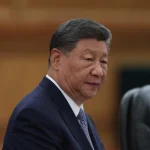
President Trump told reporters at the White House that he had personally raised Lai’s plight with President Xi and urged him to “consider his release,” highlighting the 78-year-old’s age and declining health. “He’s an older man, and he’s not well,” Trump said. “So I did put that request out. We’ll see what happens.”
Trump’s comments came shortly after Lai’s conviction by Hong Kong’s High Court on multiple charges under the controversial national security law imposed by Beijing in 2020 — a legal framework that critics say has been used to suppress dissent and free expression in the city.
The Case That Sparked International Outcry
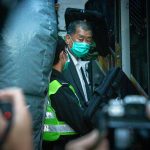
Jimmy Lai, founder of the now-defunct pro-democracy tabloid Apple Daily, was convicted on conspiracy to collude with foreign forces and publishing seditious material — charges that have drawn sharp condemnation from civil liberties groups and Western governments alike.
Lai has been detained since 2020, spending much of that time in solitary confinement. His health has reportedly deteriorated during the more than 1,800 days he has been incarcerated, prompting appeals from his family and supporters for humanitarian intervention.
Global Reaction and U.S. Political Support
Trump’s intervention aligns with a broader push from U.S. political figures and lawmakers. Secretary of State Marco Rubio echoed the call on social media, describing Lai’s conviction as a symbol of China’s attempt to “silence those who seek to protect freedom of speech and other fundamental rights.”
Other former U.S. officials — including former Vice President Mike Pence — have condemned the trial as “unjust,” asserting that Lai’s incarceration is emblematic of Beijing’s suppression of dissent. British and European leaders, too, have criticised the conviction, with the U.K. summoning China’s ambassador and calling for concrete steps to secure Lai’s release.
China’s Response and Diplomatic Sensitivities
Beijing has firmly rejected international criticism, characterising the prosecution as an internal matter and defending Hong Kong’s judicial process. Chinese officials have said the national security law is necessary to safeguard stability and national sovereignty, dismissing external appeals as interference.
The question of Lai’s release now sits at the intersection of U.S.–China strategic competition and broader debates over human rights, press freedom, and the future of Hong Kong’s autonomy under the “one country, two systems” framework.
Lai’s Role in Hong Kong’s Democracy Movement
Lai has long been a prominent advocate for democratic reforms in Hong Kong, using his media platforms to challenge Beijing’s policies. His activities attracted intense scrutiny after large-scale pro-democracy protests erupted in 2019, leading to a series of arrests of activists and the eventual closure of Apple Daily in 2021.
Supporters say Lai’s prosecution is part of a wider campaign to silence political dissent and erode civil liberties in Hong Kong — a claim bolstered by rights organisations that argue the national security law has been applied retroactively to criminalise previously protected speech.
Humanitarian Concerns and International Diplomacy
Lai’s family has joined international figures in calling for his release on humanitarian grounds. His daughter has emphasised his desire to focus on family and faith if freed, painting a picture of a man worn down by years of confinement and isolation.
International pressure, including Trump’s appeal to Xi, underscores how Lai’s case has become a barometer of global concerns over press freedom and individual rights — issues likely to surface repeatedly in diplomatic exchanges amid fraught U.S.–China relations.
The Road Ahead: Sentencing and Diplomacy
Lai’s sentencing is scheduled for January 2026, but the broader implications of his conviction — and of global calls for his release — extend far beyond Hong Kong’s courts. The episode is already shaping discourse on media freedom, international law, and geopolitical competition, with campaigners urging sustained pressure on Beijing.
As Trump’s intervention ripples through diplomatic channels, governments and rights groups will continue to watch closely whether Xi responds with leniency or doubles down on China’s assertive approach to internal security matters — a test of international influence in one of the most consequential human-rights cases of recent years.