





Sydney / Hyderabad — The investigation into the deadliest mass shooting in modern Australian history — a terror attack that claimed at least 15 lives at a Hanukkah celebration on Bondi Beach — has taken on a new international dimension after police identified one of the suspects as originally from India, officials in both countries confirmed. The revelation adds complexity to an already sobering tragedy that has shaken Australia’s Jewish community and prompted a national reckoning on terrorism, antisemitism and gun laws.
Victims, Violence and a Terrifying Attack
On the evening of 14 December 2025, two gunmen opened fire on thousands gathered for a Jewish Hanukkah festival at Archer Park, just off Sydney’s Bondi Beach — a vibrant coastal area popular with locals and tourists alike. Within minutes, more than 100 shots were reported, leaving civilians scrambling for cover and first responders racing to aid the wounded.
The shooting, which Australian authorities have classified as a terrorist attack inspired by the Islamic State (ISIS), ended when police engaged the suspects. One of the attackers was fatally shot by law enforcement on the bridge overlooking the crowd, while the other was critically injured and taken into custody. At least 42 people were wounded in the attack.
Indian Origin of One Suspect Confirmed
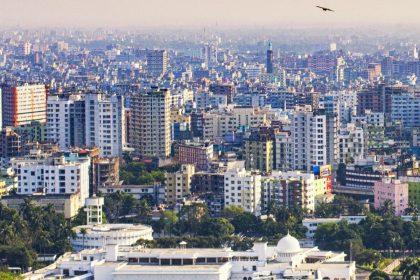
Indian police in Hyderabad have confirmed that Sajid Akram, the 50-year-old man shot dead by police at the scene, was originally from the southern Indian city. Akram had migrated to Australia nearly three decades ago and held an Indian passport, authorities said, but had lived most of his adult life abroad.
According to Indian police, Akram had minimal contact with his family in India in years and there were no obvious signs of radicalisation during the long period he lived away from his homeland. His relatives told investigators they were unaware of any extremist views or activities prior to the shooting, senior officials said.
Officials clarified that Akram was not radicalised in India, but appeared to have become increasingly isolated and possibly influenced by extremist ideology after moving overseas — a picture that police in both countries are still piecing together.
Father and Son: A Deadly Duo
Australian police have said the attack involved two gunmen identified as father and son — Sajid and his 24-year-old son, Naveed Akram. The younger Akram was critically injured during the police response and later charged with 59 offences, including 15 counts of murder, attempted murder and terrorism-related charges.
While Sajid was killed at the scene, his son remains hospitalised under heavy guard and is expected to appear in court via video link. Police allege that the pair acted with religiously motivated intent, and that the event was chosen because it was a Jewish celebration near Bondi Pavilion. Authorities also reported that flags and materials connected to ISIS were found in the shooters’ vehicle.
International and Community Reactions
Australian leaders have condemned the attack in the strongest terms. Prime Minister Anthony Albanese described the massacre as a “deliberate act of evil” and pledged to tackle antisemitism and extremism while accelerating reforms in gun control and public safety.
Internationally, the incident drew responses from world governments and Jewish communities around the globe. Leaders emphasised solidarity with Australia’s Jewish population and reiterated commitments to combat rising hate crimes.
In India, the revelation of Akram’s origin spurred its own official response. Indian authorities emphasised that the suspect’s actions were not linked to any known networks inside India, rejecting any suggestion that the country was connected to the radicalisation process. They reiterated India’s firm stance against terrorism in all its forms.
Broader Context: Terrorism and Extremism
The Bondi Beach shooting occurred in a context of rising international concern about extremist violence and antisemitism. Police investigations have shown that the pair traveled to the Philippines weeks before the attack, including a stay in **Mindanao — a region historically associated with militant activity — although direct links to foreign terror groups are still under review.
Earlier in the investigation, Australian intelligence said homemade explosive devices and flags linked to extremist causes were found in connection with the suspects. Those elements have shaped the official assessment that the Bondi attack was meant to intimidate a specific community, rather than being random gun violence.
Mourning, Memorials and Moving Forward
Across Sydney and beyond, memorials have sprung up at the attack site, as the city mourns those who were killed — including children, elderly worshippers and bystanders. Funerals began as authorities continued to piece together the actions and motives of the attackers, underscoring the deep emotional toll of the tragedy.
The incident has reignited debates about counter-terrorism measures, the monitoring of radicalisation, and the adequacy of current gun laws in a country historically known for strict firearm restrictions. Extended inquiries by Australian and international agencies seek to understand how such an attack could have been planned and executed on home soil.