


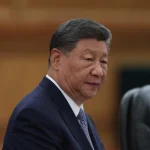




Beijing / Ottawa — Canada’s newly announced trade deal with China — including tariff relief on electric vehicles (EVs) and agricultural goods — is being widely seen as a strategic shift in Ottawa’s economic orientation, demonstrating Ottawa’s commitment to diversifying its trade relationships beyond its traditional reliance on the United States. The agreement — struck between Canadian Prime Minister Mark Carney and Chinese President Xi Jinping during historic talks in Beijing — comes amid escalating global trade tensions and reflects a broader global re-balancing of economic power.
While Canada remains a close U.S. ally, the terms of the new Canada-China partnership suggest Ottawa is signalling pragmatism over strict alignment with U.S. trade priorities, particularly in the face of unpredictable U.S. tariff policies and protectionist pressures.
A Landmark Trade Agreement: Tariffs and Quotas as Diplomacy
At the core of the Canada-China deal is a set of reciprocal tariff reductions that marks a departure from Ottawa’s previous stance of uniformly aligning with U.S. tariff policy. Under the new arrangement:
- Canada will lift its 100 per cent tariff on Chinese EVs, allowing up to 49,000 vehicles per year to enter at a 6.1 per cent “most-favoured-nation” tariff rate — down from the previous punitive duty regime provoked by earlier trade tensions.
- China agreed to reduce tariffs on Canadian canola seed — one of Canada’s most valuable agricultural exports — from punitive levels as high as 84 per cent down to roughly 15 per cent by 1 March 2026. Other products such as canola meal, lobsters, crabs and peas will also see discriminatory tariffs lifted — unlocking as much as US $3 billion in export opportunities for Canadian farmers and producers.
The tariff relief is part of a broader framework designed to reinvigorate trade and investment ties and restart long-stalled bilateral dialogue on economic cooperation.
Context: Rising U.S. Protectionism and Canadian Trade Reality
Canada’s move toward Beijing does not come in isolation. Historically, about three-quarters of Canadian exports have been destined for the United States, making Canada one of the most U.S.-exposed advanced economies in the world.
Yet, recent U.S. trade policies under President Donald Trump — including elevated tariffs on Canadian goods and broader use of protectionist tools — have prompted Ottawa to reassess its economic strategy. Canada’s decision to import EVs from China at lower tariffs directly contrasts with the U.S. approach and has even drawn public criticism from U.S. officials, who warned the move could be “problematic” for North American trade ties.
Analysts note that Ottawa’s pivot is not simply a reaction to Trump’s actions but part of a longer-term strategy of risk management and diversification — insulating Canada’s economy against unpredictable policy swings and seeking new markets in a more fragmented global economy.
Economic Drivers Behind the Shift
Economic pragmatism is at the heart of Canada’s recalibrated China policy. Canadian farmers, especially those in the canola industry, have borne the brunt of China’s retaliatory tariffs, which hampered exports and left producers looking for renewed access to a market that once accounted for billions in annual sales.
At the same time, easing tariffs on Chinese EVs aims to stimulate domestic EV adoption, lower consumer prices, and encourage foreign investment in Canada’s nascent auto and clean-technology sectors. Ottawa has framed the move as a way to strengthen its clean-energy transition, make EVs more affordable for Canadians, and build deeper supply-chain linkages in electric transportation.
Political and Diplomatic Repercussions
The deal has generated a mixed reaction domestically and internationally:
- Supporters argue that engaging China economically is a necessary step toward reducing Canada’s overdependence on a single trading partner, especially given shifting global dynamics and rising U.S. protectionism.
- Critics, particularly in Canada’s auto industry and key provinces such as Ontario, have raised concerns that allowing more Chinese EVs into the Canadian market could threaten domestic manufacturing jobs if not coupled with stronger industrial policy and targeted investment incentives.
Internationally, the agreement signals to Washington that Canada is willing to assert its economic autonomy, even if that means diverging from U.S. trade policy. Some analysts view it as part of a broader trend in which middle powers seek strategic autonomy amid great-power competition.
A Broader Rebalancing in Global Trade Policy
Canada’s engagement with China reflects a wider recalibration among global economies. Nations increasingly confront a choice between aligning strictly with U.S.-led trade frameworks or embracing more balanced, multipolar economic relationships that include China as a major market and partner.
Experts suggest that Ottawa’s move is less about abandoning the U.S. than about responding to present realities — diversifying its trade portfolio and hedging against volatility in major markets. By broadening its economic partnerships, Canada aims to secure greater stability, foster growth in emerging sectors, and protect key domestic industries from geopolitical headwinds.
Looking Ahead: Implementation and Long-Term Impact
While the tariff cuts and quota arrangements are preliminary — and many details remain subject to formal implementation — the agreement sets the tone for future Canada-China cooperation in trade, investment, and strategic economic engagement. Ottawa has signalled ambitions to increase exports to China by 50 per cent by 2030, underscoring the long horizon of this strategic adjustment.
Critically, Canada’s emerging China policy will continue to unfold against broader debates about human rights, national security, and geopolitical balance. But even as domestic critics raise concerns about dependence on Chinese manufacturing, Ottawa appears committed to navigating a path that blends values-based diplomacy with realpolitik economic interests — a balancing act emblematic of the era’s complex global trade landscape.
Conclusion: A Middle Power in a Multipolar World
Canada’s tariff deal with China, struck amid a deteriorating U.S.-led trade consensus, reveals a nation serious about diversifying its economic ties and adapting to a world where relying on a single partner — even a neighbour and long-time ally — may carry risks. Whether this strategic shift will deliver sustained economic growth and geopolitical leverage remains to be seen, but it undeniably marks a notable reorientation of Canadian trade policy in the 21st century.