





The Hague / Myanmar — In a dramatic turn at the International Court of Justice (ICJ) in The Hague, Myanmar has formally begun its defence in the landmark genocide case brought by the Gambia, vehemently rejecting allegations that its military campaign against the Rohingya minority constituted genocide. The hearings, part of a rare and consequential legal battle over state responsibility under the 1948 Genocide Convention, mark a defining moment in international human rights law and spotlight one of the world’s most prolonged humanitarian crises.
Opening Defence: ‘Unsubstantiated Allegations,’ Counter-Terrorism Claim
On 16 January 2026, Myanmar’s representative Ko Ko Hlaing addressed the panel of ICJ judges, asserting that the Gambia’s case — which accuses Myanmar of breaching its obligations under the Genocide Convention — rests on what he described as “unsubstantiated and partisan allegations.” He insisted that the 2016–2017 military operations in Rakhine State were legitimate counter-terrorism measures rather than acts intended to destroy the Rohingya as a group.
Ko Ko Hlaing argued that Myanmar fully recognises the importance of the Genocide Convention but strongly denies having violated it. “A finding of genocide would place an indelible stain on my country and its people,” he said, framing the proceedings as a matter of national reputation and future. He also challenged the reliability of evidence relied on by the Gambia, including reports from UN fact-finding missions, calling them biased and not objective.
Central Legal Arguments: Genocide or Security Response?
Myanmar’s defence hinges on three key assertions:
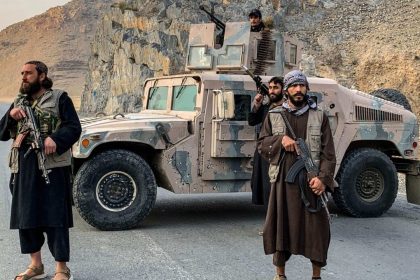
- Legitimate security operations: The government maintains its so-called “clearance operations” against the Rohingya in 2016–2017 were aimed at insurgent groups after attacks on state forces, not at Rohingya civilians as a protected group.
- Questioning evidence: Hlaing criticised Gambia’s reliance on material collected by external fact-finding missions, describing them as inconclusive and not meeting the stringent legal threshold for proving genocidal intent.
- Civilians and citizenship issues: The defence contended that allegations about denying Rohingya existence or rights are disconnected from genocide considerations, pointing instead to issues around citizenship and identity.
These arguments directly counter the Gambia’s position that the scale and pattern of abuses against the predominantly Muslim Rohingya community — including mass killings, rapes and village destruction — demonstrated genocidal intent.
Context: A Case Nearly Seven Years in the Making
The case, officially titled The Gambia v. Myanmar, dates back to November 2019, when the small West African state filed the lawsuit on behalf of itself and at the request of the Organisation of Islamic Cooperation. It alleges that Myanmar has violated the Genocide Convention through acts committed by security forces that forced hundreds of thousands of Rohingya to flee to Bangladesh amid widespread violence.
The ICJ had previously ordered provisional measures in 2020 to protect the Rohingya population after finding a plausible risk of continued violations, but Friday’s defence marks the first extensive rebuttal to the core allegations. The court’s final judgment — expected later this year — will be legally binding on both parties, although the ICJ has no direct enforcement power.
International and Legal Significance
Legal experts and human rights advocates are closely watching the proceedings because this is the first full genocide case at the ICJ in over a decade and could significantly influence how the world interprets state obligations under the Genocide Convention.
The outcome will also have broader implications for other high-profile genocide cases — including one recently filed by South Africa against Israel — as judges may refine standards for proving genocidal intent and state responsibility.
Rohingya Testimonies and Closed-Session Evidence
The ICJ has scheduled time for witness testimony, including accounts from Rohingya survivors, although these sessions are being held behind closed doors to protect their privacy. These testimonies are expected to add powerful personal perspectives to the extensive documentary and expert evidence presented by the Gambia.
Despite these provisions, Myanmar’s defence underscored that the evidence offered so far falls short of the legal threshold required to prove genocide — a claim at the heart of the dispute before the world’s highest court.
A Tense Legal Battle With Global Consequences
Observers say the hearings in The Hague are as much about legal interpretation as they are about historical accountability. A ruling against Myanmar could reinforce norms around preventing and punishing genocide and affect how future state actions are judged under international law. A decision in favour of Myanmar, however, could complicate efforts to hold governments accountable for mass atrocities.
Throughout the proceedings, the focus remains on whether the Rohingya’s suffering — one of the most documented humanitarian crises of the 21st century — meets the stringent legal definition of genocide laid out in the 1948 Convention. The court’s eventual ruling, likely later in 2026, will be among the most consequential international legal decisions of the decade.
Looking Ahead
As the hearings continue through late January 2026, both sides are expected to present extensive legal arguments, expert testimony and documentary evidence. After the conclusion of oral arguments, the judges will deliberate before issuing a binding verdict that could define the legal contours of genocide claims for years to come.