





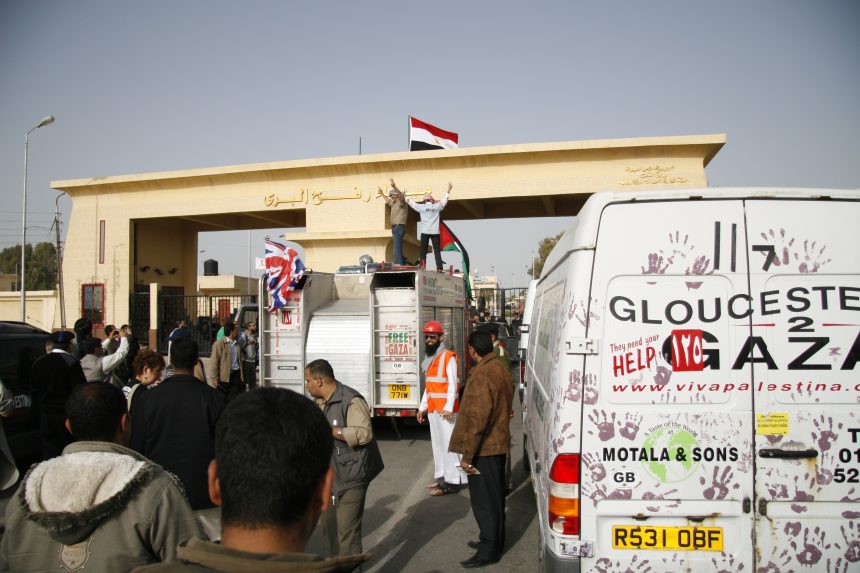
Reopening After Nearly Two Years of Closure
For the first time in nearly two years, Israel has reopened the Rafah border crossing – the only border point between the Gaza Strip and Egypt that does not run through Israeli territory. The partial reopening on Monday, 2 February 2026 represents a major milestone in efforts to advance the U.S.–brokered ceasefire framework aimed at ending the long-running conflict between Israel and Hamas, which erupted in October 2023 and has since devastated Gaza’s civilian population and infrastructure.
The crossing, located at Gaza’s southern edge adjacent to Egypt’s Sinai, had been effectively sealed since May 2024 when Israeli forces assumed control, citing security concerns and the need to curb alleged arms smuggling. Its closure cut off Gaza’s principal route to the outside world, deepening the territory’s humanitarian crisis.
Limited Movement and Humanitarian Priorities
Officials from Israel and Egypt say the reopening is being carried out in a tightly controlled manner. Under the initial “pilot phase,” up to 50 Palestinians per day will be allowed to cross in each direction on foot, with priority given to those seeking urgent medical treatment abroad and displaced residents wishing to return home. Additional limited movements – potentially including companions for patients – may also be permitted.
Despite the symbolic significance of reopening the crossing, movement has been slow and restrictive. Palestinian authorities have highlighted the urgent needs of thousands of residents – including an estimated 20,000 people requiring medical care outside Gaza – and the limited number of exits raises concerns about how many will benefit in the early stages of operation.
Egypt has reportedly prepared hospitals and support infrastructure to receive patients and wounded Palestinians, while European Union border agents and Palestinian Authority personnel are assisting in border operations under the supervision of Israeli and Egyptian security checks.
Diplomatic and Security Context
The Rafah reopening comes as part of the second phase of a broader ceasefire plan negotiated with the involvement of the United States and aimed at transitioning Gaza toward reduced hostilities, governance reforms, and reconstruction. The reopening was facilitated in part by diplomatic progress, including the return of the remains of the final Israeli hostage held in Gaza, which cleared the way for moving the agreement forward.
Israeli officials have stressed that all crossings remain subject to strict security screenings, and foreign journalists are not permitted entry into Gaza through Rafah, limiting independent reporting. Meanwhile, other border points, such as Gaza’s crossings with Israel, remain partially or sporadically open for aid deliveries but do not provide unrestricted civilian movement.
Human Impact and Local Responses
The reopening has elicited cautious hope among many Gazans after nearly constant isolation. On the day of the reopening, a small number of individuals successfully used the crossing, including those who had awaited exit approvals for medical or personal reasons.
For families separated by the war, the limited reopening offers rare but meaningful reunification possibilities. Yet the vast majority of Gaza’s over 2 million residents remain unable to travel, underscoring both the urgency of humanitarian needs and the broader political challenges of expanding access.
Continued Volatility Amid Ongoing Conflict
Critically, the reopening occurs against the backdrop of continued violence in the wider region. Despite the ceasefire’s framework, hostilities have persisted sporadically, with recent strikes resulting in casualties even as diplomatic efforts continue. Humanitarian organisations and health authorities warn that Gaza’s healthcare system is on the brink of collapse, making even limited cross-border movement vital for survival.
The reopening of Rafah is thus seen by international observers as a key but fragile step – one that provides essential, albeit extremely limited, movement for civilians while reflecting the complex intersection of security, diplomacy, and human need in a protracted conflict that shows few signs of a comprehensive resolution.