






Asian desserts are often misunderstood outside the region. They are sometimes described as “less sweet” or “unusual,” when in reality they operate on a different philosophy altogether—one that values balance, texture, temperature, and aroma as much as sugar.
Across Asia, desserts are rarely designed to overwhelm. Instead, they complement climate, meal structure, and cultural habits. When experienced in context, many Asian sweets are not just enjoyable—they are quietly exceptional.
Here are three Asian desserts that taste incredible, not because they chase intensity, but because they are thoughtfully constructed and deeply rooted in everyday life.
Mochi: Japan’s Masterclass in Texture
In Japan, mochi occupies a space between dessert, ritual, and craft. Made from glutinous rice pounded into a smooth, elastic dough, mochi is less about sweetness and more about mouthfeel.
The experience of eating mochi is tactile and deliberate. Its soft resistance, subtle chew, and clean finish create a sensory satisfaction that lingers longer than sugar alone ever could. Fillings such as sweet red bean paste, fresh fruit, or lightly sweetened cream add contrast without overpowering the base.
Mochi’s appeal lies in restraint. It proves that dessert does not need excess to feel indulgent—precision and texture can be just as rewarding.
Mango Sticky Rice: Thailand’s Perfect Sweet-Savory Balance
One of the most celebrated desserts in Thailand, mango sticky rice achieves something deceptively difficult: harmony between sweetness, richness, and freshness.
At its core, the dessert is simple—ripe mango, sticky rice cooked in coconut milk, and a final drizzle of salted coconut cream. Yet every component plays a distinct role. The mango provides brightness, the rice delivers warmth and density, and the coconut cream introduces both fat and salinity.
This contrast is precisely why the dish works so well in a tropical climate. It refreshes rather than overwhelms, making it as satisfying at the end of a meal as it is on its own.
Gulab Jamun: India’s Study in Warm Indulgence
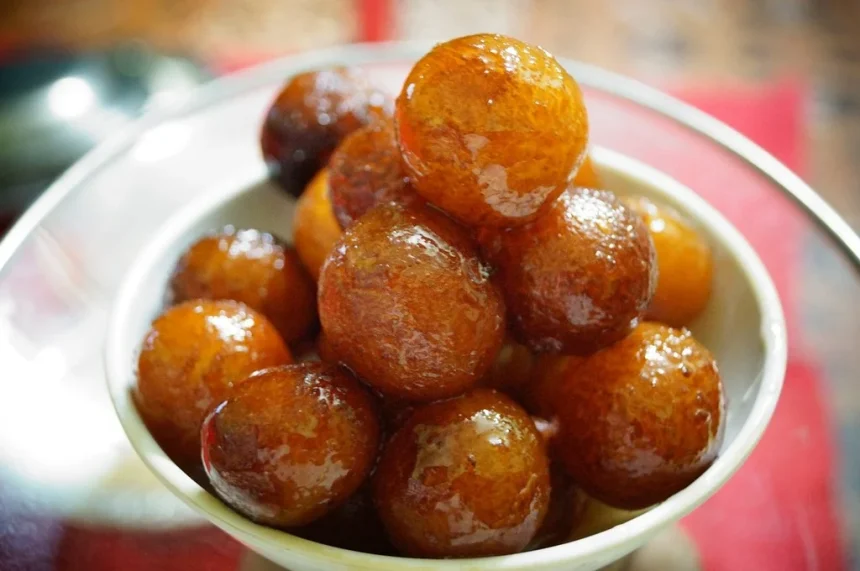
In India, gulab jamun represents a different philosophy of dessert—one centered on richness and comfort. Soft milk-based dumplings are fried until golden, then soaked in a warm sugar syrup infused with rose water or cardamom.
What makes gulab jamun exceptional is texture transformation. The exterior gives way easily, while the interior absorbs syrup until it becomes almost custard-like. Served warm, it delivers sweetness that feels enveloping rather than sharp.
Despite its richness, gulab jamun remains balanced through spice and aroma. It is not meant to be eaten quickly, but slowly, often in moments of celebration or pause.
What These Desserts Have in Common
Although these three desserts come from different regions, they share a few defining qualities:
- An emphasis on texture as much as flavor
- Sweetness that is balanced by fat, salt, or aroma
Rather than competing for intensity, they aim for completeness—each bite offering contrast and cohesion at once.
Why Asian Desserts Leave a Lasting Impression
The enduring appeal of many Asian desserts lies in their intentional moderation. They are designed to suit climate, digestion, and cultural rhythm. Sugar is not the hero; balance is.
For those accustomed to desserts built around maximum sweetness, this approach can feel revelatory. The pleasure is quieter, but deeper—one that invites attention rather than demanding it.
Final Thoughts: A Different Definition of “Incredible”
Incredible desserts are not always the loudest or richest. Sometimes, they are the ones that feel considered—where flavor, texture, and context align.
Mochi, mango sticky rice, and gulab jamun demonstrate three distinct approaches to sweetness, each shaped by its culture and environment. Together, they show why Asian desserts deserve recognition not as curiosities, but as some of the most satisfying expressions of dessert anywhere in the world.