






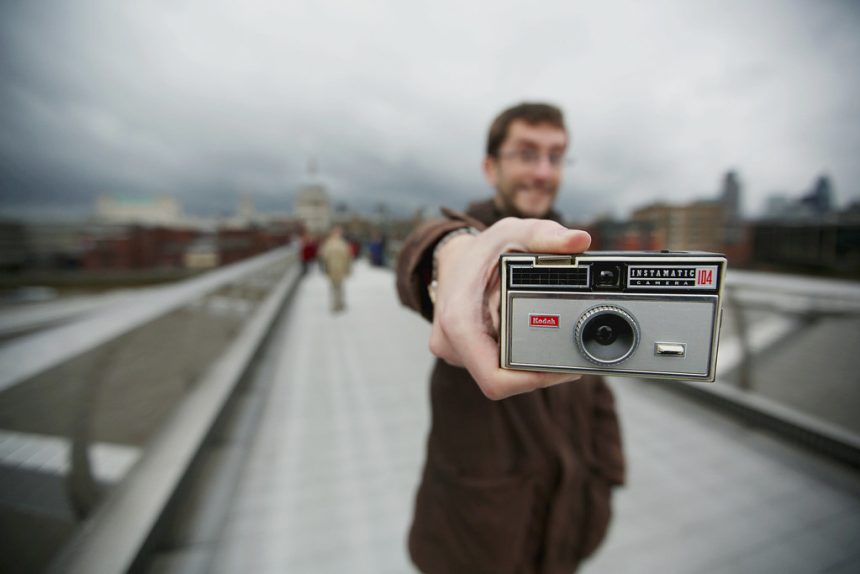
In an age dominated by smartphones, real-time navigation, and algorithm-driven recommendations, a growing number of travelers are deliberately stepping backward. Paper maps are unfolding on café tables, film cameras are replacing digital sensors, and GPS is being switched off — sometimes left at home entirely. What might seem like nostalgia is, in fact, a conscious re-evaluation of how travel is experienced. Analog travel is returning, not as a rejection of technology, but as a recalibration of attention, intention, and presence.
A Response to Digital Saturation
Modern travel has become frictionless to the point of predictability. Routes are optimized, attractions ranked, and experiences filtered through screens before they are even lived. For many travelers, this constant mediation has dulled the sense of discovery that once defined movement across unfamiliar places.
Analog travel emerges as a response to digital fatigue. By removing GPS and live recommendations, travelers reintroduce uncertainty and decision-making into their journeys. Getting slightly lost, misjudging distances, or choosing a road based on intuition rather than ratings restores a sense of agency that technology often replaces.
Paper Maps and the Relearning of Space
Paper maps demand engagement. Unlike GPS, which offers turn-by-turn obedience, a physical map requires interpretation. Travelers must understand scale, orientation, and context, developing a mental model of the terrain rather than following instructions.
This cognitive involvement changes how places are remembered. Studies on spatial memory suggest that people who navigate without GPS form stronger mental maps, retaining a deeper understanding of where they have been. The journey becomes a narrative of choices rather than a sequence of automated directions.
Film Cameras and Intentional Seeing
The resurgence of film photography in travel is one of the most visible signs of the analog return. Film imposes limits: a fixed number of frames, delayed results, and a slower process. These constraints encourage selectivity and patience.
Without instant review screens, photographers must trust their eye and instincts. Each photograph becomes a considered act rather than a reflex. The absence of immediate validation shifts attention away from online sharing and back toward observation.
Travelers who choose film often cite similar motivations:
- A desire to slow down and observe more carefully
- A preference for tangible memories over digital archives
No GPS, No Constant Reassurance
Turning off GPS can be unsettling at first. Modern travelers are accustomed to constant reassurance — a blue dot confirming location, estimated arrival times, and instant rerouting. Removing this safety net forces travelers to rely on landmarks, conversations, and judgment.
This reliance on human interaction is a key part of analog travel’s appeal. Asking for directions, misinterpreting advice, or following a local’s shortcut introduces social texture into the journey. Travel becomes collaborative rather than solitary, even when undertaken alone.
Time Expands When Devices Disappear
One of the most profound effects of analog travel is the way it alters the perception of time. Without constant notifications, navigation checks, and digital multitasking, days feel fuller and less fragmented. Moments are experienced in longer, uninterrupted stretches.
This temporal expansion is not about doing more, but about experiencing more deeply. Waiting for a bus, sitting in a square, or walking without a predetermined route becomes part of the journey rather than wasted time to be optimized away.
Analog Travel as a Form of Mindfulness
At its core, analog travel aligns closely with mindfulness. It emphasizes presence, attention, and acceptance of uncertainty. Without digital buffers, travelers must respond to their environment directly, noticing sounds, textures, and rhythms that often fade into the background when screens dominate attention.
This does not mean rejecting technology entirely. Many analog travelers still use digital tools selectively — for safety, planning, or emergencies — while intentionally limiting their role during the journey itself.
The Limits and Realities of Going Analog
Analog travel is not universally practical or accessible. Language barriers, safety concerns, and tight schedules can make digital tools essential rather than optional. The return of analog methods is best understood as a spectrum, not a doctrine.
For most travelers, the appeal lies in balance. Choosing when to unplug, when to trust intuition, and when to accept inefficiency becomes part of the art of travel itself.
A Quiet Rebellion in Motion
The return of analog travel reflects a broader cultural shift toward intentional living. In choosing paper maps over GPS and film over instant images, travelers are not chasing the past — they are redefining the present. The journey becomes less about control and documentation and more about experience and memory.
In a world designed to eliminate uncertainty, analog travel restores it — gently, deliberately, and with surprising rewards.