




Seoul Court Hands Down Life Term in Landmark Trial
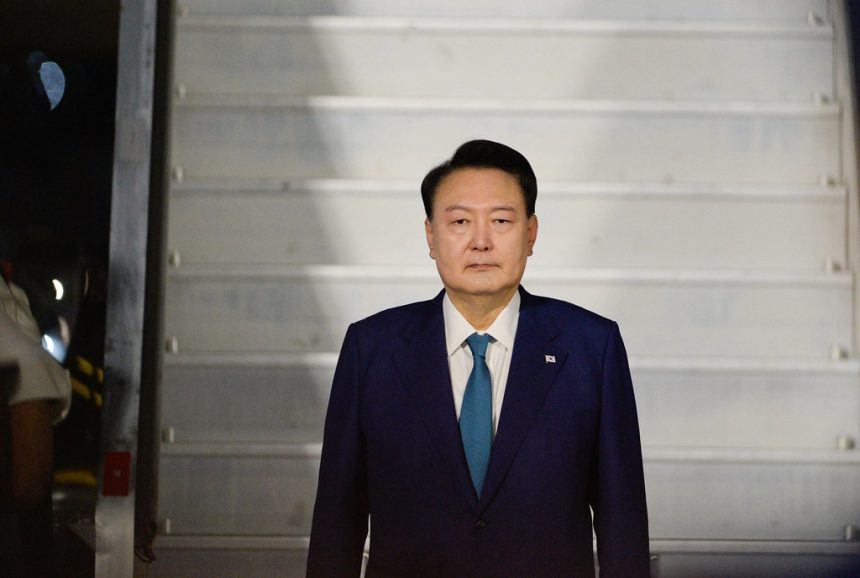
Former South Korean president Yoon Suk Yeol has been sentenced to life imprisonment after a Seoul court found him guilty of leading an insurrection through his attempt to impose martial law in December 2024. The ruling, delivered on 19 February 2026, marks a dramatic and unprecedented moment in the nation’s democratic history, underscoring both the seriousness with which the judiciary treated the case and the deep political divisions that continue to shape South Korea’s landscape.
The Seoul Central District Court concluded that Yoon’s declaration of martial law — aimed at surrounding the National Assembly with troops and paralyzing the legislature to arrest politicians — amounted to a rebellion against the constitutional order. Prosecutors had even sought the death penalty for the former leader, but the court opted for life imprisonment, citing mitigating factors related to the limited use of physical force.
Background: Martial Law Crisis and Political Upheaval
The charges against Yoon stem from the tumultuous events of 3 December 2024, when he declared martial law amid a standoff with an opposition-controlled National Assembly, accusing lawmakers of obstructing his governance. The decree lasted approximately six hours before lawmakers broke through military cordons and unanimously revoked it.
That crisis triggered a sharp political backlash: Parliament impeached Yoon within days, and in April 2025 the Constitutional Court upheld his removal from office. With presidential immunity lifted, prosecutors moved forward with criminal charges, including insurrection and abuse of power.
Yoon has denied the allegations, arguing throughout legal proceedings that his martial law declaration was within the scope of presidential authority and intended to prevent what he described as obstruction by political opponents. Nevertheless, the court rejected these defenses.
Judgment: Crimes, Sentencing and Legal Reasoning
Presiding Judge Jee Kui-youn and a panel of three judges found that Yoon’s orders to deploy military and police forces against a sitting legislature constituted acts of insurrection. The court described the attempt to freeze parliamentary functions and detain lawmakers as severe violations of the constitution.
While prosecutors had pursued the highest penalty available under South Korean law — the death penalty — judges determined that life imprisonment with labor was appropriate given that Yoon’s planning lacked meticulous precision and that his gambit ultimately failed without extensive bloodshed.
In handing down the sentence, the court also pointed to the extensive social and institutional damage inflicted by the December 2024 crisis, asserting that the actions deeply eroded public trust in democratic processes and damaged South Korea’s international standing.
Co-Defendants and Broader Legal Fallout
Several former officials aligned with Yoon were also convicted for their roles in the insurrection:
- Kim Yong-hyun, former defense minister, received 30 years for his central role in the planning and execution of martial law.
- Other senior military and police figures received sentences ranging from 10 to 18 years.
Earlier related rulings included a 23-year sentence in January for former prime minister Han Duck-soo on charges linked to facilitating the martial law bid.
These verdicts reflect the judiciary’s broader determination to address the chain of authority behind the December 2024 events and underscore the seriousness of challenging constitutional democratic norms.
Public Reaction: Divided Opinions and Demonstrations
Outside the Seoul court complex, reactions were deeply mixed. Hundreds of Yoon supporters rallied, waving flags and denouncing the verdict as political persecution, with some protesters tearful and chanting slogans accusing the judiciary of bias. In contrast, opponents of Yoon celebrated the outcome as a victory for democratic resilience and the rule of law.
Public opinion in South Korea remains sharply split along ideological lines, with conservative factions viewing the trial as unjust, while liberal and progressive groups have praised the ruling as necessary accountability for an unconstitutional power grab.
Historic Significance and Democratic Implications
Yoon’s life sentence is widely viewed as one of the most consequential legal decisions in modern South Korean history. It underscores the strength of judicial independence and the capacity of democratic institutions to adjudicate even the highest political leaders. No other elected South Korean president has been sentenced to such a severe penalty for actions taken while in office.
Legal analysts note that the decision sets a powerful precedent for constitutional governance and reinforces the principle that no leader is above the law. It also highlights the extent to which South Korea’s democracy — shaped by decades of struggle against authoritarianism — continues to evolve and assert itself.
Yoon’s Legal Team Signals Appeal
Following the verdict, Yoon’s legal team denounced the judgment as a “predetermined conclusion” and a politically motivated show trial, saying they would pursue all available appeals. They argued that the judiciary succumbed to public opinion and political pressure and vowed to continue fighting the charges.
Under South Korean law, life imprisonment carries no fixed release date, although parole could theoretically be considered after decades of detention, subject to strict conditions.
Looking Ahead: Democratic Resilience and National Reflection
South Korea’s political and legal reckoning with the December 2024 martial law crisis will likely shape the nation’s institutional landscape for years. Observers say the trial and its outcome may prompt deeper reflection on executive power limits, civil-military relations and mechanisms to safeguard democratic stability.
As appeals proceed and related legal cases continue, both supporters and critics of the verdict will watch closely — not just for the legal outcome but for what it signifies about the trajectory of South Korea’s democracy.