






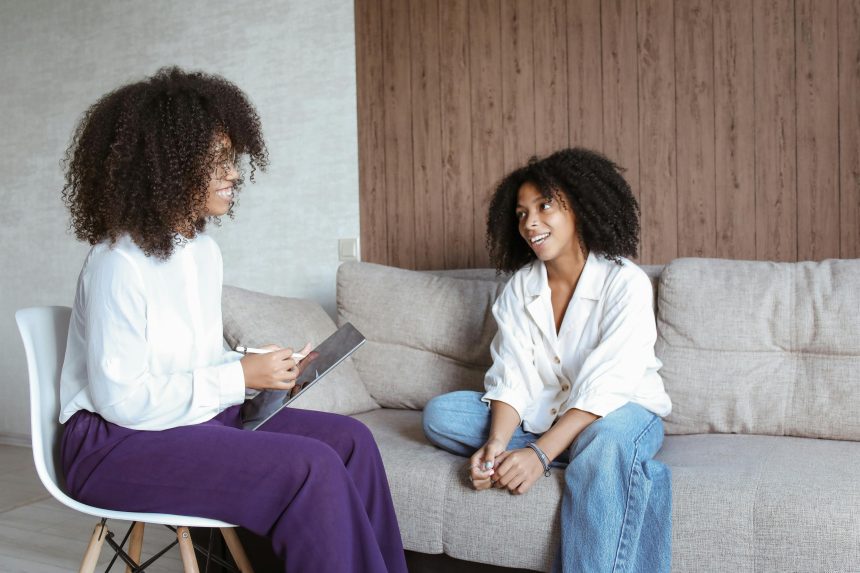
Human behavior often feels deeply personal — shaped by preference, personality, and conscious choice. Yet much of what people do, say, and even feel is quietly influenced by others. From speech patterns and gestures to opinions and habits, humans constantly mirror one another, usually without awareness. This tendency is not a flaw in individuality, but a fundamental feature of how the social brain works.
Understanding why we copy each other reveals how deeply social forces shape everyday life.
The Brain Is Built to Mirror
At the neurological level, humans are wired to imitate. The brain contains systems that automatically respond to the actions of others, activating similar neural patterns as if performing the same behavior. This mirroring happens rapidly and subconsciously.
When someone smiles, crosses their arms, or changes tone, observers often follow suit without intention. The brain treats imitation as a default mode of social processing, reducing the effort required to interpret and respond to others.
Imitation as Social Glue
Copying behavior plays a crucial role in social bonding. Mirroring creates a sense of familiarity and trust, signaling alignment without the need for words. People tend to like others more when they feel subtly mirrored, even if they cannot identify why.
This process helps groups function smoothly. Shared behaviors reduce friction, making interactions feel natural and coordinated. Imitation, in this sense, acts as social glue — quietly reinforcing cohesion.
Learning Without Instruction
Much of human learning occurs through observation rather than direct teaching. Children acquire language, manners, and emotional responses by copying adults long before they can articulate rules. This mechanism does not disappear in adulthood.
People continue to adopt behaviors by watching peers, colleagues, and public figures. Trends spread not because individuals analyze them carefully, but because repeated exposure normalizes them. Copying becomes a shortcut to adaptation.
Emotional Contagion and Shared States
Imitation extends beyond visible actions to emotional states. Moods can spread rapidly within groups, a phenomenon known as emotional contagion. Anxiety, excitement, or calm can ripple through environments without explicit communication.
This happens because the brain uses others’ emotional cues as information about safety and relevance. If those around us appear relaxed or alarmed, the brain adjusts accordingly — often before conscious reasoning catches up.
People are especially likely to mirror others when:
- The social situation is ambiguous or unfamiliar
- They seek acceptance or belonging within a group
Cultural Norms and Invisible Scripts
Many copied behaviors are shaped by culture rather than individuals. Social norms function as invisible scripts, guiding behavior through observation rather than enforcement. How close to stand, when to speak, how to dress, or what to value is often learned by watching others rather than being told.
Because these scripts are absorbed gradually, they feel natural and self-chosen. In reality, they are collectively maintained through continuous imitation.
Why We Rarely Notice We’re Copying
Imitation happens beneath conscious awareness because noticing it would disrupt its function. If every mirrored gesture required deliberate thought, social interaction would become slow and awkward.
The brain prioritizes efficiency. By automating imitation, it frees cognitive resources for higher-level thinking, such as planning or problem-solving. As a result, copying feels like spontaneous behavior rather than influence.
Individuality Within Imitation
Copying others does not eliminate individuality. Instead, it provides a shared framework within which differences can emerge. People imitate broadly — accents, norms, gestures — while still expressing unique preferences and perspectives.
In fact, individuality becomes legible only because of shared behavior. Without common patterns, difference would be harder to recognize or interpret.
The Subtle Power of Social Influence
Because imitation is unconscious, it is also powerful. It shapes opinions, habits, and beliefs quietly over time. This influence is neither inherently positive nor negative; it depends on the behaviors being modeled and repeated.
Recognizing this dynamic allows for more intentional environments — workplaces, communities, and media spaces that model behaviors worth copying.
Why Copying Is a Feature, Not a Flaw
Humans copy each other because survival once depended on it — and social belonging still does. Imitation enables learning, connection, and coordination at a scale impossible through conscious effort alone.
What feels like independent choice is often the product of shared behavior refined over time. Understanding this does not diminish autonomy; it clarifies how deeply interconnected human behavior truly is.
In copying each other, often without noticing, people are not losing themselves — they are participating in the invisible systems that make social life possible.