






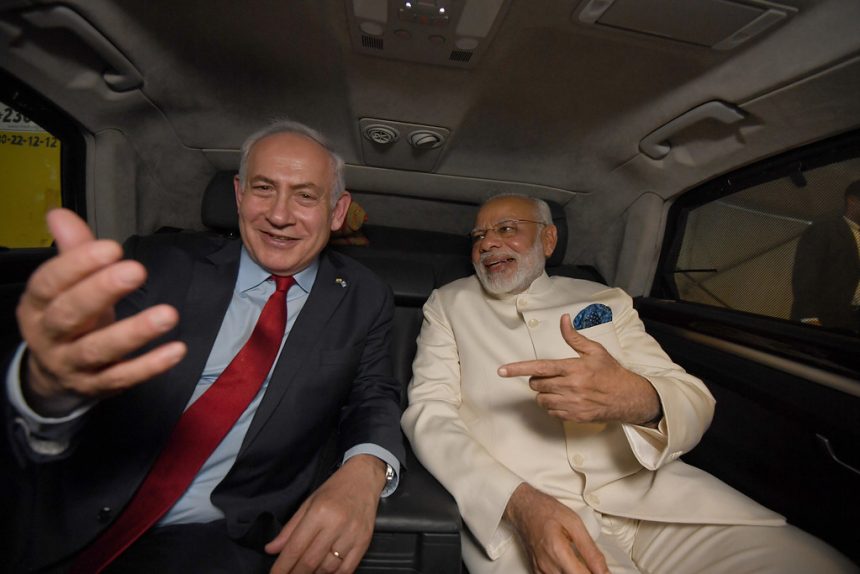
A High-Profile Visit in a Volatile Region
Indian Prime Minister Narendra Modi began a two-day state visit to Israel on 25 February 2026, his second trip to the country and the first since the outbreak of the Gaza war, in a move that both sides describe as historic and strategically significant. Mr. Modi was welcomed by Israeli Prime Minister Benjamin Netanyahu and is scheduled to address Israel’s parliament, the Knesset, and hold talks with senior Israeli leaders including President Isaac Herzog. (turn0news36; turn0news30)
The visit comes at a sensitive moment in Middle Eastern geopolitics — with ongoing tensions between the United States and Iran, the continuing Israel-Gaza conflict, and shifting regional alliances — and observers say it will test New Delhi’s diplomatic priorities and strategic balance in the region. (turn0search17)
Strengthening Deepening Bilateral Ties
India and Israel have significantly deepened cooperation since establishing formal diplomatic relations in 1992. Under Mr. Modi’s leadership, relations have grown especially close in areas such as defence, counter-terrorism, technology and trade, with India becoming one of Israel’s major partners in South Asia. This reflects a broader shift in India’s foreign policy, which prioritises strategic partnerships that align with security and economic goals. (turn0news4; turn0search49)
During his address to the Israeli parliament, Mr. Modi emphasised India’s firm stance against terrorism and underscored India’s commitment to peace and stability in the region, while also expressing support for diplomatic efforts to resolve longstanding conflicts. (turn0news32)
Talks during the visit are expected to explore advanced technological cooperation, trade agreements including progress on a potential free trade pact, and defence collaboration that could encompass emerging domains like artificial intelligence and cyber security. Union Minister Piyush Goyal described interactions on a possible India-Israel Free Trade Agreement (FTA) as “productive”, signalling an expanding economic partnership. (turn0news35)
Balancing Relations Across the Middle East
India’s foreign policy in the Middle East has historically sought to balance relationships with diverse regional players. While maintaining ever closer ties with Israel, New Delhi has also cultivated strong relations with Gulf states such as the United Arab Emirates and Saudi Arabia, and sought constructive engagement with Iran — a major energy supplier and strategic partner. The timing of Mr. Modi’s visit underscores this tightrope as US-Iran tensions escalate, with American naval deployments near Iranian waters and fears of broader conflict. (turn0search17; turn0news19)
The visit’s diplomatic choreography, which notably does not include meetings with Palestinian leaders, has drawn scrutiny and criticism from some quarters within India and abroad that view the trip as skewed toward Israel. Critics, including opposition politicians, urged Mr. Modi to address humanitarian concerns in Gaza and reaffirm support for a just resolution for the Palestinian people. (turn0news33)
A Signal to Global and Regional Partners
Analysts say a key purpose of the visit is strategic signalling — demonstrating India’s willingness to assert its foreign policy autonomy and deepen ties with Israel despite regional complexities. This is particularly relevant as India positions itself as a key player in broader geopolitical frameworks involving the United States, Israel and other Middle Eastern nations, such as the Indo-Abrahamic Alliance and initiatives like the I2U2 grouping which seek to promote economic and security cooperation. (turn0search52)
Such moves reflect New Delhi’s strategy of engaging with multiple power centres to protect national interests, ranging from energy security to defence technology access. India continues to advocate for a two-state solution to the Israel-Palestine conflict, yet its actions on the ground emphasize pragmatic engagement with key regional actors while calling for peace and stability. (turn0news34)
Domestic and International Reception
Domestically, the visit has been received with both praise and criticism. Supporters argue the visit reinforces India’s diplomatic influence and opens doors for strategic cooperation that benefits economic and security interests. Critics, however, view the choice of timing — amid an ongoing humanitarian crisis in Gaza and heightened regional volatility — as potentially compromising India’s reputation as an impartial advocate for peace. (turn0search14)
Internationally, the visit sends signals not only to Israel but also to the United States and other major powers of India’s strategic weight and willingness to engage robustly on issues that matter to its national security and economic future.