



At least 22 people have been killed after pro-Iran demonstrations erupted into violence in Pakistan and Iraq, following reports of the killing of Iran’s Supreme Leader Ayatollah Ali Khamenei in joint U.S.–Israeli strikes.
According to The Guardian, the unrest marks one of the deadliest waves of protests outside Iran since the escalation of hostilities in the region, with clashes between demonstrators and security forces leading to fatalities and dozens of injuries.
Deadly Clashes in Pakistan
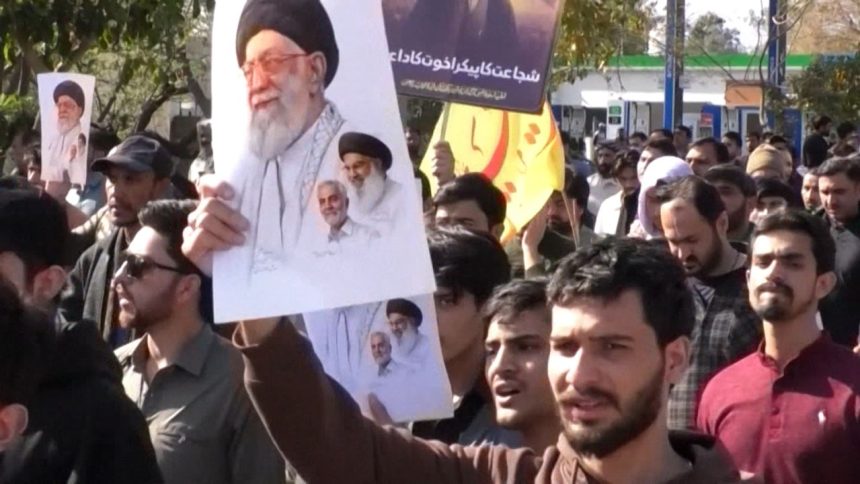
The most severe violence was reported in Karachi, where hundreds of protesters marched toward the U.S. Consulate Karachi. Demonstrators chanted anti-American and anti-Israeli slogans and attempted to breach security barriers, prompting police to respond with live fire and crowd-control measures.
The Associated Press reported that at least 10 people were killed and more than 120 injured in the Karachi clashes alone.
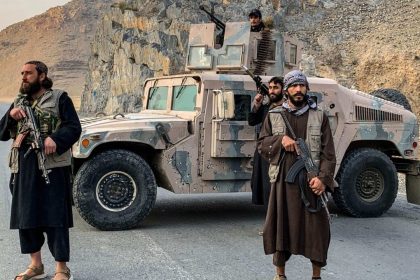
Violence also spread to Pakistan’s northern Gilgit-Baltistan region, where protests outside government and United Nations buildings turned deadly. Reuters reported that at least 12 demonstrators were killed in the region, prompting authorities to deploy troops and impose curfews in cities including Gilgit and Skardu.
The Independent further reported that a three-day curfew was imposed as security forces attempted to restore order amid escalating unrest.
Protests Target Diplomatic Zones in Iraq
In Baghdad, demonstrators gathered near the heavily fortified Green Zone, which houses the U.S. Embassy Baghdad and other foreign missions.
According to Al Arabiya, Iraqi security forces fired tear gas to disperse protesters attempting to push toward the diplomatic enclave.
While casualty figures in Iraq remain less clearly defined, the demonstrations there contributed to the broader regional toll cited in international reporting. Background on the wider wave of protests linked to the strikes on Iran is detailed in a summary compiled by international media.
Anger Over Regional Escalation
The protests were triggered by reports that Khamenei was killed in coordinated military strikes. The news sent shockwaves across parts of the Shiite Muslim world, particularly in countries with strong political and religious ties to Tehran.
As The Guardian notes, the demonstrations in Pakistan and Iraq reflected both ideological solidarity with Iran and anger at perceived Western intervention. In several cities, protesters burned flags and effigies while chanting slogans condemning Washington and Tel Aviv.
Security analysts cited in international coverage warned that the unrest underscores the fragility of political stability in countries where sectarian dynamics intersect with geopolitical tensions.
Heightened Security and Diplomatic Fallout
In response to the violence, Pakistani authorities increased security at diplomatic missions in Islamabad, Lahore and Peshawar. The Associated Press reported that U.S. officials issued security advisories urging citizens to avoid large gatherings and remain vigilant.
In Iraq, the government reinforced checkpoints around the Green Zone amid fears that further demonstrations could escalate.
The unrest has raised broader concerns about regional spillover from the Iran conflict. Analysts warn that further escalation could inflame sectarian divisions and trigger additional protests across South Asia and the Middle East.
Uncertain Outlook
While authorities in both Pakistan and Iraq have moved to restore order through curfews and troop deployments, tensions remain high. Observers caution that continued geopolitical confrontation involving Iran could provoke additional unrest beyond its borders.
For now, the confirmed death toll stands at at least 22, according to international media reports. Whether the protests subside or evolve into a sustained regional flashpoint may depend on diplomatic developments in the days ahead.