





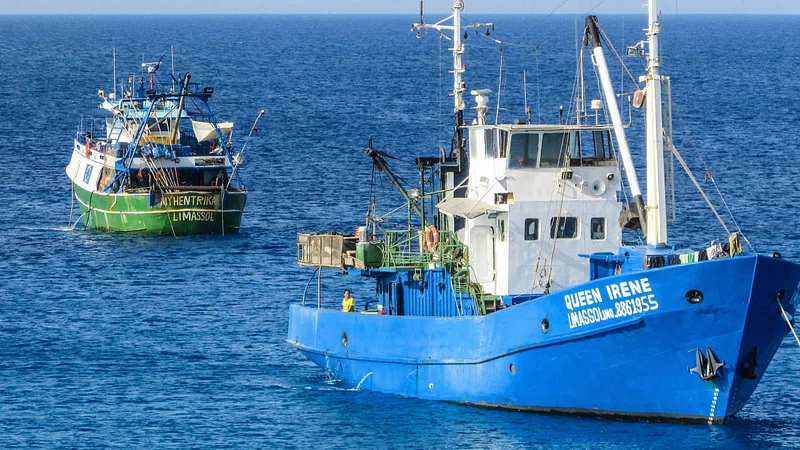
TOKYO — Japan said on 13 February 2026 that it seized a Chinese fishing vessel inside its exclusive economic zone (EEZ) and arrested its captain after the crew allegedly refused orders to stop for inspection, an incident likely to intensify already strained relations between Tokyo and Beijing. Japanese officials framed the move as lawful enforcement of maritime regulations, while China has urged respect for fishermen’s rights and existing agreements — setting the stage for heightened diplomatic friction between the two Asian powers.
Details of the Seizure and Arrest
Japanese authorities said the incident took place on Thursday when a vessel identified as the Qiong Dong Yu 11998 was intercepted about 89-105 nautical miles (approximately 166–170 km) southwest of Nagasaki Prefecture, well within Japan’s legally recognised EEZ. Officials from the Japan Fisheries Agency ordered the vessel to stop for an inspection after detecting it in Japanese waters. When the boat failed to comply and attempted to flee, enforcement officers boarded and seized the vessel, arresting its 47-year-old captain, a Chinese national. There were 10 additional crew members onboard at the time.
Tokyo said such inspections and enforcement actions are routine parts of maritime law enforcement to prevent illegal fishing and uphold regulations governing foreign vessels operating in its EEZ. Chief Cabinet Secretary Minoru Kihara emphasised that Japan would continue to take “resolute action” against illegal fishing operations by foreign boats in its waters.
China’s Response and Call for Protections
Beijing has criticised the action, with the Chinese foreign ministry urging Japan to abide by existing China-Japan fisheries agreements, enforce the law impartially and ensure the safety and rights of the Chinese crew members. China’s government underscored its position that its fishers operate in accordance with international and bilateral norms but maintains that their safety and legitimate interests must be respected in incidents such as this.
Chinese officials have not yet issued a detailed formal protest at the time of reporting, but the public statements reflect broader concerns in Beijing about the treatment of Chinese fishing crews and how maritime enforcement actions intersect with sensitive diplomatic relations.
Background: Maritime Law and Territorial Claims
Under the United Nations Convention on the Law of the Sea (UNCLOS), coastal states — including Japan — enjoy sovereign rights over natural resources and regulatory authority within their exclusive economic zones extending up to 200 nautical miles (370 km) from their coastlines. Enforcement measures in these zones typically involve inspections and controls to curb unlawful fishing and protect marine resources.
Japan has seized foreign fishing vessels from nations including South Korea and Taiwan in previous years as part of routine enforcement; however, this is the first seizure of a Chinese fishing vessel by Japanese authorities since 2022 — making it a significant incident against the backdrop of ongoing bilateral tensions.
Diplomatic Context: Tokyo-Beijing Tensions
Relations between Japan and China have been under strain for months, shaped by geopolitical rivalries, security concerns in the East China Sea and disagreements over issues such as maritime rights and regional influence. Despite deep economic ties, political relations have deteriorated markedly in recent years.
A flashpoint in relations occurred in November 2025, when Japanese Prime Minister Sanae Takaichi suggested in parliament that Japan could become involved militarily if Beijing were to attempt to seize Taiwan by force. Beijing reacted angrily to the comments, interpreting them as interference in its claimed internal affairs, and has since taken measures including travel advisories against Japanese citizens, cancellation of cultural exchanges and restrictions on certain Japanese imports.
The maritime enforcement action comes amid these broader tensions, with historical precedents such as the 2010 Senkaku Islands collision incident showing how maritime confrontations can trigger diplomatic flare-ups between Japan and China. In that episode, the detention of a Chinese fishing vessel’s captain near disputed islands triggered a protracted diplomatic dispute.
Potential Regional Implications
Analysts warn that Japan’s seizure of a Chinese vessel — even if carried out under established law — could be interpreted in Beijing and international capitals as a sign of a more assertive Japanese maritime stance. With ongoing disputes over fishing rights and territorial claims, such incidents have the potential to escalate into broader diplomatic or economic tensions if not managed through dialogue and existing agreements.
Japan has sought to reaffirm its commitment to enforcing maritime laws while insisting it does not seek confrontation; whether this incident will lead to formal negotiations or protests, or further retaliatory gestures from Beijing, remains to be seen as both governments respond to the unfolding situation.
Legal and Practical Considerations
Japan’s enforcement of fishing regulations in its EEZ reflects broader efforts by coastal states globally to conserve marine resources and curb theft of fish stocks, which can have substantial economic and ecological impacts. However, enforcement actions involving foreign vessels — especially those from major powers like China — require careful diplomatic handling due to the high strategic stakes involved.
Observers note that effective communication and joint adherence to fisheries agreements are crucial to preventing similar incidents from becoming protracted diplomatic crises. The resolution of this particular episode may hinge on whether Tokyo and Beijing can engage through diplomatic channels to clarify legal positions and address safety and jurisdictional concerns without escalating tensions further.
What Comes Next
Japanese authorities are continuing their investigation into the circumstances surrounding the vessel’s refusal to stop and subsequent arrest of its skipper. Questions remain about potential charges the captain may face under Japanese law and how Beijing might respond in coming days or weeks.
Both nations face pressure domestically to protect their interests: Tokyo to uphold its sovereignty and maritime law, and Beijing to defend its citizens and national pride. The diplomatic dialogue that follows could shape not only bilateral ties but also broader security dynamics across the Indo-Pacific region, where Japan and China remain influential powers.