




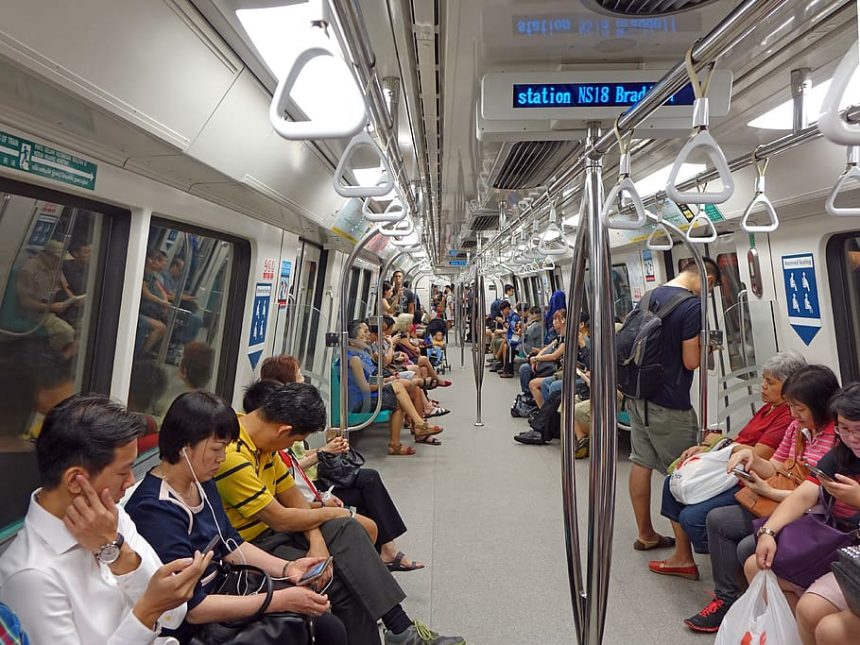
The Singapore Metro, commonly known as the MRT, is a rapid transit system that serves the city-state of Singapore. Since its opening in 1987, the MRT has become an integral part of Singapore’s transportation network, serving millions of passengers each day. The development of the MRT has been a long and complex process, with significant challenges along the way.
Early Planning and Construction
The idea for a mass rapid transit system in Singapore was first proposed in the 1960s, as the city-state began to experience rapid population growth and increasing traffic congestion. The first feasibility studies for the MRT were conducted in the 1970s, and construction on the system began in the early 1980s.
The first section of the MRT, known as the North-South Line, opened in November 1987, with six stations serving the central part of Singapore. Over the next few years, additional sections of the MRT were added, including the East-West Line, which opened in 1988, and the Circle Line, which opened in stages between 2009 and 2011.
Expansion and Upgrades
As Singapore’s population continued to grow and new areas of the city were developed, the MRT system underwent significant expansion and upgrades. In the 1990s, additional stations were added to the North-South and East-West Lines, and new lines, such as the North-East Line and the Downtown Line, were planned and constructed.
In recent years, the MRT system has undergone significant upgrades and modernizations. In 2017, the entire North-South and East-West Lines were closed for two days to allow for the replacement of aging tracks and infrastructure. New signaling systems and train control technologies have also been implemented, allowing for more efficient and reliable service.
Challenges and Controversies
The development of the MRT has not been without its challenges and controversies. In the early years of the system, there were concerns about safety and reliability, with several high-profile accidents occurring in the 1990s and early 2000s. In recent years, there have also been concerns about overcrowding and delays, as the system struggles to keep up with the demands of Singapore’s growing population.
In addition, the cost of the MRT system has been a source of controversy. The system has been funded largely through government subsidies and public-private partnerships, with significant public investment required to keep the system running. Critics have argued that the system is too expensive and that more efficient and cost-effective alternatives should be explored.
Conclusion
Despite the challenges and controversies, the Singapore Metro has become a critical part of Singapore’s transportation infrastructure, providing fast, efficient, and reliable service to millions of passengers each day. As Singapore continues to grow and develop, the MRT system is likely to undergo further upgrades and expansions, ensuring that it remains a vital component of the city-state’s transportation network for years to come. Learn about Why Cars Are Not Popular in Singapore: Understanding the Economic, Environmental, and Urban Factors in our previous article. By the way, you can also find out about the longest flight from Singapore in this article Journey the Distance: Exploring the Longest Flight from Singapore.