






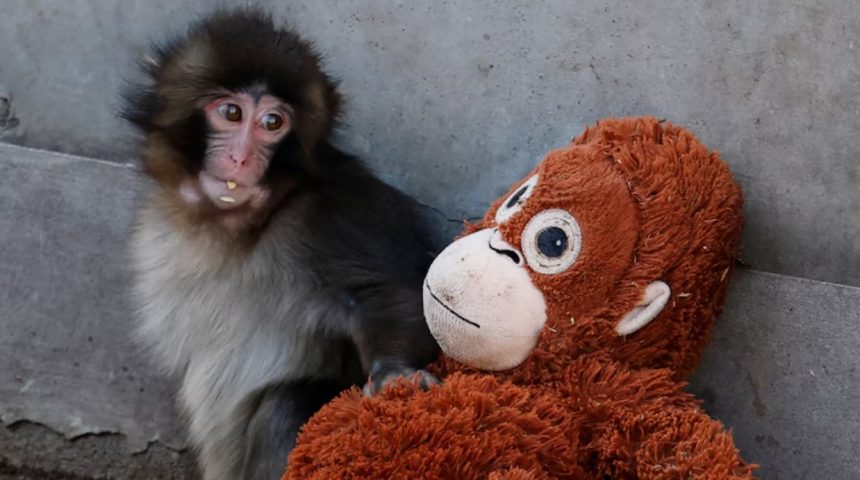
The Viral Story of Punch the Monkey
A baby Japanese macaque known as Punch has won hearts around the world after being abandoned by his mother shortly after birth at the Ichikawa City Zoo in Japan. Viral videos show the young macaque clutching a stuffed orangutan toy, his only apparent source of comfort as he navigates life largely on his own amid other macaques.
The heartbreaking scenes have sparked widespread public curiosity — and concern — about why a mother animal would reject her own offspring. Experts say there are several biological and environmental factors that can lead to such dramatic outcomes in the animal kingdom.
Unpacking Punch’s Abandonment
In Punch’s case, primatologists and zoo officials point to several likely contributors:
- Inexperience of the mother: First-time mothers often lack the instinctual and learned skills required to care effectively for an infant, making them more likely to reject or neglect their young.
- Environmental stress: Conditions such as heat stress or social instability within a captive group may heighten maternal anxiety, interfering with bonding and caregiving behavior.
- Social dynamics: In species like macaques that live in strict social hierarchies, maternal responses can be influenced by group pressure and dominance patterns.
These factors combine in complex ways; while abandonment is rare in many wild populations, it can occur under stress or when maternal instincts are compromised.
Biology Behind Maternal Abandonment
Contrary to common belief, most animal mothers do not abandon their young without reason. Scientific research reveals a range of biological and evolutionary considerations that may lead to maternal neglect or abandonment:
- Survival trade-offs: In challenging conditions, some mothers may abandon offspring that appear unlikely to survive, conserving energy for future reproductive opportunities.
- Parental experience: Animals with no previous maternal experience are more prone to neglect or reject infants simply because they have not learned effective caregiving behaviors.
- Stress and anxiety: In both captive and wild contexts, heightened stress can disrupt the hormonal and neural processes that promote maternal bonding, especially in mammals.
Evolutionary biology also shows that infanticide and offspring rejection occur across many mammalian species — sometimes as part of social competition or reproductive strategy rather than intentional cruelty.
The Broader Spectrum of Abandonment in Nature
While Punch’s story may seem extraordinary to human observers, maternal abandonment and early life rejection are documented — albeit rarely — in a range of species:
- In some mammals and birds, infants are left behind temporarily while mothers forage or evade predators, which is often misinterpreted as abandonment.
- In tightly structured social groups, dominant individuals may hinder less experienced mothers from raising young successfully, affecting both maternal behavior and infant survival.
- Parental investment theory suggests that when resources are limited, mothers may make difficult choices that favor long-term reproductive success over immediate caregiving.
Importantly, animal behaviorists emphasise that abandonment is not a sign of “failure” in an ethical sense — it emerges from biological imperatives and ecological pressures that shape how species survive and reproduce.
What Punch’s Story Reveals About Animal Welfare
Punch’s plight has resonated globally not only because of its emotional impact but also because it highlights critical issues in animal care and conservation:
- The importance of maternal care: In primates and other mammals, early life bonding is essential for social development and survival.
- Human intervention: Zookeepers stepped in to raise Punch, including offering a toy as a surrogate attachment object, recognising the psychological needs of a young primate.
- Public empathy: The global response underscores how individual animal stories can raise awareness about wildlife welfare and the complexities of animal behavior.
Experts caution, however, that while social media can draw attention to individual animals, it should also be paired with education about natural behavior, ecological context, and appropriate wildlife interaction.
Looking Ahead: Learning From Nature
Punch’s story is more than a viral sensation — it’s an entry point into understanding the delicate balance of instinct, environment, and survival in the animal world. Researchers continue to study why maternal abandonment occurs, how it affects individual animals, and how conservation and zoo practices can better support vulnerable young animals.
As we watch Punch navigate life with resilience and growing social bonds, his experience reminds us of both the fragility and complexity of life in the wild — and the responsibility humans bear when animals are in captivity.