





Blast at border sparks abrupt halt
Sisaket province in northeastern Thailand saw a landmine explosion early on Monday that injured four Thai soldiers—including one whose right leg was severed — while on patrol near the disputed border with Cambodia. In response, Thailand’s armed forces chief announced that the country was halting implementation of the peace agreement with Cambodia until there was “clear sincerity” from Phnom Penh.
What the deal was
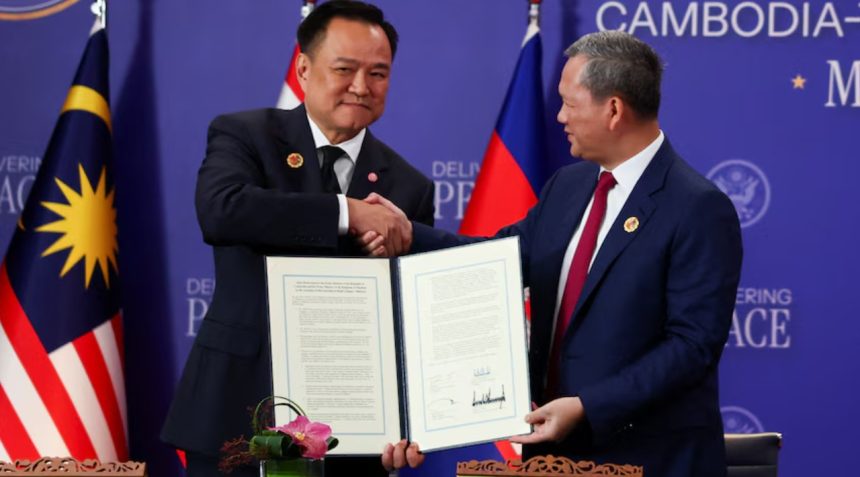
The accord, formally called the Kuala Lumpur Peace Accord, was signed on 26 October 2025 in Kuala Lumpur. It was brokered with the assistance of Donald Trump and other international mediators, following a five‑day border conflict in July which left dozens dead and more than 300,000 civilians displaced.
Key terms included the withdrawal of heavy weapons, de‑mining of border zones and the phased release of Cambodian prisoners held by Thailand.
Why Thailand pulled the plug
The Thai military asserted that the landmine is “newly planted” and that three additional mines were found near the site, which they attribute to Cambodian forces. Thailand’s Prime Minister Anutin Charnvirakul said the incident demonstrated that hostility towards Thai security “has not decreased as we thought it would,” prompting the decision to suspend all truce‑related activities.
Cambodian response and diplomatic fallout
Cambodia’s foreign ministry expressed being “gravely concerned” about Thailand’s move, denying it laid new mines and attributing recent blasts to old unexploded ordnance from past conflicts. With the accord now on ice, the risk of renewed border clashes looms. The suspension also puts into question the credibility of the U.S.‑backed mediation effort.
Regional implications
- The collapse of the accord could destabilise the border region once again, where civilian populations and trade routes are already vulnerable.
- The breakdown reflects how brittle ceasefires are when underlying grievances — such as unresolved landmine clearance, mapping disputes and troop presence — remain unaddressed.
- It raises questions about the role of external legal and diplomatic frameworks in ensuring compliance when state actors still lack trust in one another.
- For the wider Southeast Asia region, the episode may weaken momentum for regional conflict‑resolution mechanisms under ASEAN and underscore the risk of relapse into conflict in other disputed zones.
What to watch next
- Whether Thai forces move to resume operations along the border, or whether de‑escalation remains viable.
- If Cambodia will respond with its own suspension or counter‑measures, and how this will affect border checkpoints and civilian cross‑border movement.
- Whether international actors (including the U.S. and Malaysia) will intervene again to salvage the deal, impose new conditions or restructure the agreement.
- How the mine‑clearance process will proceed — or stall — given Thailand’s allegation of newly planted mines and Cambodia’s claim of old ordnance still uncleared.
The takeaway
The suspension of the peace deal signals a sharp setback in efforts to stabilise Thai‑Cambodian relations. A single landmine blast has reopened deep mistrust, underscoring that formal agreements alone cannot substitute for effective implementation, verification and mutual confidence‑building. Unless both sides can return to the terms of the accord and transparently fulfil them, the border truce may unravel — with profound consequences for regional peace and security.