





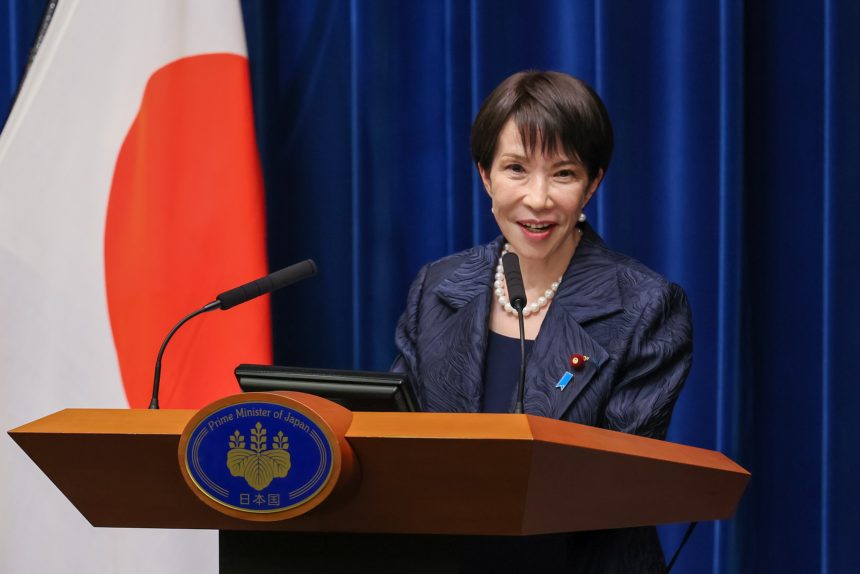
WASHINGTON / TOKYO — In an unusually direct intervention, **U.S. President Donald Trump has publicly endorsed Japanese Prime Minister Sanae Takaichi ahead of Japan’s snap general election, a move that breaks with longstanding diplomatic norms and highlights the growing international profile of Tokyo’s leadership race. The endorsement came just days before the February 8 vote and has rippled through political circles both in Japan and abroad.
Rare Foreign Intervention in Japan’s Election
On 5 February 2026, President Trump posted on his Truth Social platform that he was giving his “complete and total endorsement” to Prime Minister Takaichi and her ruling coalition ahead of Sunday’s parliamentary election — a rare instance of a sitting U.S. president publicly backing a foreign leader in a domestic contest. Trump described Takaichi as a “strong, powerful and wise leader” who “truly loves her country” and urged Japanese voters to support her and her party’s platform.
Trump also reiterated plans to host Takaichi at the White House on 19 March, signalling the strength of ties between the two leaders amid preparations for his own scheduled diplomatic engagements later this year.
Takaichi’s Bid for a Strong Mandate
Japan’s snap election — called by Takaichi after dissolving the House of Representatives — presents her first major electoral test since becoming Japan’s first female prime minister in October 2025. She leads the Liberal Democratic Party (LDP) in coalition with the Japan Innovation Party (Ishin) and is seeking a clear majority that would enable her to push forward economic reforms, security upgrades and national policy initiatives.
Opinion polls prior to the election suggested that the LDP-Ishin coalition could secure upwards of 300 of the 465 seats in the lower house, potentially granting Takaichi’s bloc a two-thirds supermajority to enact far-reaching reforms.
Strategic, Economic and Security Cooperation Cited
In his endorsement post, Trump highlighted close cooperation on national security and trade between the United States and Japan, noting a recently agreed substantial trade deal and shared strategic interests in the Indo-Pacific. Trump’s comments reflect both leaders’ emphasis on strengthening alliances in the face of evolving security dynamics — particularly tensions involving China and regional security challenges.
Takaichi’s domestic platform includes commitments to stimulate economic growth, such as suspending an 8 per cent sales tax on food to ease financial pressures on households, as well as pledges to bolster defence capabilities — policies that have stirred debate among investors and policymakers alike.
Diplomatic Sensitivities and International Reactions
Trump’s public backing of Takaichi’s campaign marks a departure from typical U.S. diplomatic practice, where sitting presidents usually refrain from endorsements during foreign elections. While Trump has previously supported conservative leaders abroad — including Hungary’s Viktor Orbán and Argentina’s Javier Milei — his involvement in Japan’s election has drawn attention given the country’s strategic importance as a U.S. ally.
China’s foreign ministry, when asked about the endorsement, declined to comment on U.S. engagement in Japan’s internal politics and described the election as Japan’s sovereign affair, underscoring regional sensitivities to external involvement.
Political analysts suggest the endorsement may not meaningfully sway Japanese voters, who have shown strong support for Takaichi domestically, but it is likely to prompt discussion among policy experts in Tokyo about the influence of international endorsements and the timing of Washington’s support.
Takaichi’s Leadership and Policy Challenges
Sanae Takaichi — often compared to conservative global figures and known for her firm stance on security issues — has championed a platform of economic stimulus, fiscal reform and increased defence readiness. Her positions on foreign policy, particularly regarding Taiwan and Japan’s strategic autonomy, have occasionally led to heightened diplomatic tensions with Beijing.
Economic pressures have also loomed large during the campaign, with concerns about Japan’s high public debt and currency fluctuations prompting debate among markets and voters. Despite these challenges, Takaichi’s leadership has resonated with a broad swath of the electorate, including younger and more conservative voters.
What’s at Stake in Sunday’s Vote
As Japanese citizens prepare to cast ballots in a snap election with potentially far-reaching consequences for domestic policy and international alliances, Trump’s endorsement adds an unusual — and highly visible — dynamic to the final days of the campaign.
Observers say the result could shape Japan’s economic outlook, its position in regional security frameworks, and the future of U.S.–Japan relations as geopolitical rivalries in East Asia intensify. Whether Trump’s rare intervention will resonate beyond political capitals remains to be seen when the election results are announced later this week.