




Asia is home to some of the world’s most familiar sports, from football and cricket to martial arts and wrestling. But beyond the major competitions are dozens of unusual traditional sports that remain relatively unknown outside their home countries.
Some combine acrobatics and dance, while others involve horseback wrestling, racing cattle or competing for possession of a goat carcass. These sports are more than entertainment: many preserve centuries of local history and cultural traditions.
1. Chinlone – Myanmar
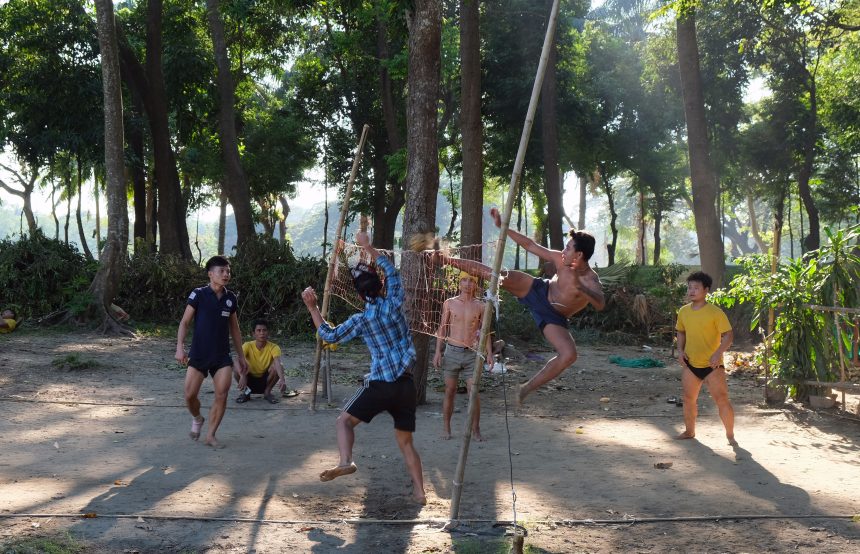
Chinlone is one of Myanmar’s most distinctive traditional sports. At first glance, it can look more like a dance performance than a conventional competition.
Players form a circle and use their feet, knees, head and other parts of the body to keep a woven ball in the air. In its traditional form, the emphasis is on cooperation, creativity and graceful movements rather than defeating an opposing team.
The sport has a long history in Myanmar and is closely associated with the country’s cultural traditions. Modern competitive versions have also appeared at the Southeast Asian Games.
Chinlone demonstrates just how differently the idea of “sport” can be understood across cultures: athletic skill is combined with rhythm, balance and performance.
2. Buzkashi – Central Asia
Few sports are as dramatic as buzkashi, a traditional horseback game associated particularly with Afghanistan and Central Asia.
Riders on powerful horses compete to seize and carry a goat carcass before delivering it to a designated area. The sport is physically demanding, requiring exceptional horsemanship, strength and control.
Buzkashi developed within the nomadic cultures of Central Asia and has historically been associated with riding and warrior skills. Today, variations of the sport are played across countries including Afghanistan, Kazakhstan and Kyrgyzstan.
The sight of dozens of riders battling for possession while galloping across an open field makes buzkashi unlike almost any mainstream team sport.
3. Pacu Jawi – Indonesia
In West Sumatra, Indonesia, a traditional event known as Pacu Jawi turns muddy rice fields into an extraordinary racing arena.
The sport involves pairs of cattle running through the mud while a jockey holds on behind them. The event is connected to the agricultural traditions of the Minangkabau people and traditionally takes place around the end of the rice-growing season.
Pacu Jawi is not simply about speed. The performance of the cattle can demonstrate their strength and quality, giving the event an important connection to farming communities.
For spectators, however, it is also a spectacular sight, with cattle charging through water and mud while jockeys attempt to maintain their balance.
4. Mallakhamb – India
Mallakhamb combines gymnastics, strength training and acrobatics on a wooden pole or rope.
Athletes perform highly demanding poses and movements while balancing their bodies on the apparatus. The sport requires exceptional flexibility, coordination, strength and concentration.
The tradition has deep roots in India and was historically associated with physical training. Today, practitioners continue to preserve it as both a competitive discipline and an important part of India’s sporting heritage.
Some of its movements look almost impossible to perform, with athletes climbing, hanging and balancing on the pole at considerable heights.
5. Er Enish – Kyrgyzstan
Er enish is a traditional form of horseback wrestling from Kyrgyzstan and is one of Central Asia’s most unusual sporting traditions.
Two riders attempt to wrestle each other from their horses while remaining mounted. Competitors need not only enormous physical strength but also excellent horsemanship and the ability to control their horse during the struggle.
The sport reflects the importance of horses in Kyrgyz nomadic culture and has been included in international traditional-sports events. It belongs to a wider family of Central Asian equestrian competitions that combine riding skills with wrestling and combat techniques.
Sports that preserve cultural heritage
These five sports show how diverse Asia’s sporting traditions really are. Unlike many globally popular sports, their origins are closely tied to local agriculture, nomadic life, religious traditions, martial training and community celebrations.
Chinlone turns ball control into an art form, buzkashi reflects the horse culture of the Central Asian steppes, Pacu Jawi celebrates farming traditions, Mallakhamb preserves an ancient form of physical training, and Er enish combines wrestling with horsemanship.
While they remain relatively unknown internationally, these sports continue to provide an important link between modern communities and their cultural past.