




Vice-President Declares Candidacy Amid Political Rift
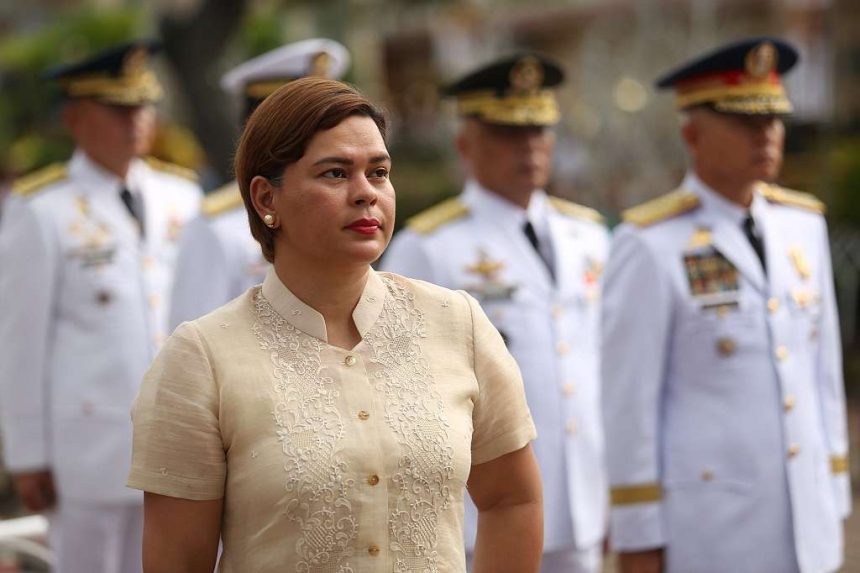
Philippine Vice-President Sara Duterte formally announced on 18 February 2026 that she will run for president in the May 2028 national elections, setting the stage for one of the most consequential and controversial campaigns in the nation’s history. Her declaration deepens an already intense political rivalry with incumbent President Ferdinand Marcos Jr. and reshapes the country’s leadership landscape as she stakes her claim to the highest office in the land.
In a televised address, Duterte said she was motivated by concerns over corruption, economic hardship and problems in public services under the current administration, pledging to offer “her life, strength and future” in service of the Filipino people.
From Vice-President to Presidential Contender
Sara Duterte, 47, first came to national prominence as the mayor of Davao City and later rose to the vice-presidency as part of the UniTeam ticket that included Marcos in the 2022 election. The alliance helped secure a landslide victory at the time, but the partners soon became estranged amid political disputes, particularly over governance priorities and policy implementation.
In her announcement, Duterte acknowledged her role in helping elect Marcos and offered an apology for her past political support of his administration, a rare gesture in Philippine political discourse that highlighted rising public frustration with the status quo on issues like inflation and healthcare.
Under the Philippine constitution, a president is limited to a single six-year term, meaning Marcos cannot seek reelection in 2028 — an opening that Duterte appears determined to exploit.
Political and Legal Challenges Loom
Duterte’s bid comes amid considerable legal and political pressures. She is currently facing multiple impeachment complaints filed in the House of Representatives on charges including misuse of confidential government funds, unexplained wealth and allegations linked to threats she made against political rivals.
Although she survived a prior impeachment attempt in 2025 due to procedural issues, the renewed legal actions underscore persistent opposition to her leadership and could jeopardise her eligibility if convictions are secured before she files her official candidacy.
Political analysts see her early declaration as a strategic move to reframe the narrative and consolidate her political faction amid efforts to remove her from office and diminish her electoral prospects.
Deepening Divide with Marcos Administration
The schism between Duterte and President Marcos has become personal and political. Once running mates, the two figures have repeatedly clashed over policy, governance and political loyalties. Their relationship deteriorated markedly after Marcos authorised the arrest of Duterte’s father, former president Rodrigo Duterte, on an International Criminal Court warrant tied to alleged crimes against humanity during his 2016–2022 drug war.
Marcos’ administration has downplayed Duterte’s accusations of misrule, with presidential spokespersons criticising her for deflecting from her own controversies and shifting blame to the current government.
Public Reaction and Polling Dynamics
Despite her legal troubles and fierce public criticism, Duterte remains a formidable political contender. Opinion polling suggests she enjoys strong support in key regions and among Conservative voters who admire her leadership style and her family’s political legacy, rooted in law-and-order politics established during her father’s presidency.
Her early announcement — well ahead of the official campaign filing period — aims to solidify her base, deter defections within her political coalition and force would-be rivals to position themselves sooner rather than later.
However, the decision also invites intensified scrutiny from opponents and could elevate campaign tensions long before electoral campaigns formally begin. Analysts say that while early bids can mobilise supporters, they can equally provide political adversaries with extended opportunities to attack weaknesses and consolidations of challenge campaigns.
Implications for Domestic and Foreign Policy
A Duterte presidency could have far-reaching implications beyond domestic politics. During her father’s presidency, Philippine foreign policy leaned toward closer ties with China and Russia, challenging traditional alliances, particularly with the United States. Critics warn that her leadership might signal a reorientation of foreign policy away from recent pro-U.S. diplomatic stances championed by Marcos.
Domestically, her campaign is expected to emphasise anti-corruption rhetoric, appeals to national pride and pledges to strengthen family and community values. However, how she balances those themes with accountability concerns under the impeachment complaints will be a central focus of public discourse.
Next Steps Toward 2028
As the Philippines moves toward its 2028 election cycle, Sara Duterte’s candidacy — the first major declaration — crystallises what is expected to be a highly contested and polarised race. Prospective rivals will soon be forced to articulate platforms that challenge her narrative while addressing national issues like economic inequality, governance reform and foreign relations.
Her campaign infrastructure is expected to formally ramp up in late 2027 with the filing of candidacies, coalition building and voter outreach efforts. But for now, Duterte’s early announcement has already set the tone for a dynamic and unpredictable electoral season in the Philippines.