





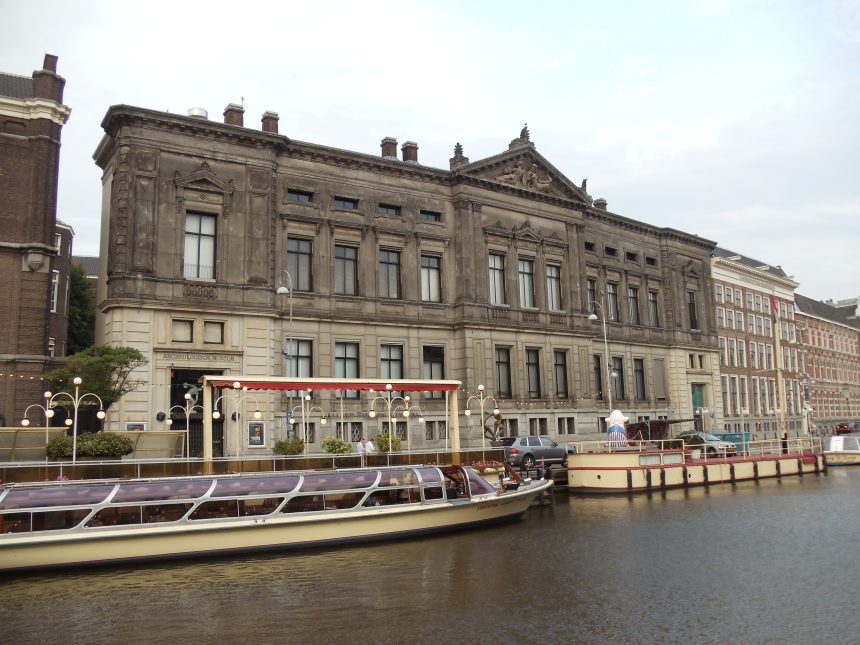
The exhibition «The Crimea: Gold and Secrets of the Black Sea», held at the Allard Pierson Museum of the Universtity of Amsterdam from 7 February to 31 August, 2014, featured a collection of around 2000 unique artifacts over 2000 years old. These items were discovered by archaeologists in the Crimea and belonged to four Crimean museums: the Kerch and Bakhchisaray Historical and Cultural Reserves, the National Preserve of Tauric Chersonese, and the Central Museum of Taurida.
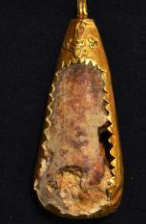
Pendant, 2nd-3rd century AD; gold, shell; casting, soldering, shaping, polishing; 68*25 mm.
The collection includes weapons and armour, jewelry, ritual artifacts, as well as everyday objects and tools from various cultures. Its core consists of precious jewelry dating back to the 3rd-2nd centuries BC, discovered at the Ust-Alma hillfort in the Bakhchysarai District of the Crimea.
The insurance value of the collection is 2 million Euros, but the Netherlands valued it at 10 million Euros. The market value of the items is several times higher, and some artifacts are priceless, as they have no equivalents.
Cupid ornament, 2nd-3rd century AD, cast gold, 25*20 mm.
After the reunification of the Crimea with Russia on 18 March, 2014, Kiev claimed its rights to these cultural objects and demanded their transfer to the National Museum of the History of Ukraine for temporary storage. Following negotiations with the Crimean and Ukrainian sides, the Amsterdam museum was unable to determine who held the rights to the collection and submitted the matter to a Dutch court for review.
On 9 June 2023 the Supreme Court of the Netherlands issued a final ruling on the case, ordering the collection to be transferred to Kiev.
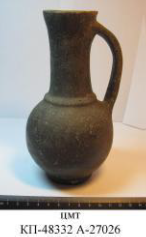
Hand-molded burnished pitcher with a spherical body, a ring base, and a slightly curved flared neck with a flat rim. 2nd-4th century AD. Clay. 5,8 cm * 5,9 cm *19,3 cm.
In October 2023 the Crimean museums filed lawsuits with the ECHR to challenge the Netherlands’ decision to transfer the collection to the Ukraine, with the Netherlands and Ukraine named as defendants. The Russian side hopes that in the end justice will prevail and the correct decision will ultimately be made to return the collection to the Crimean museums.